
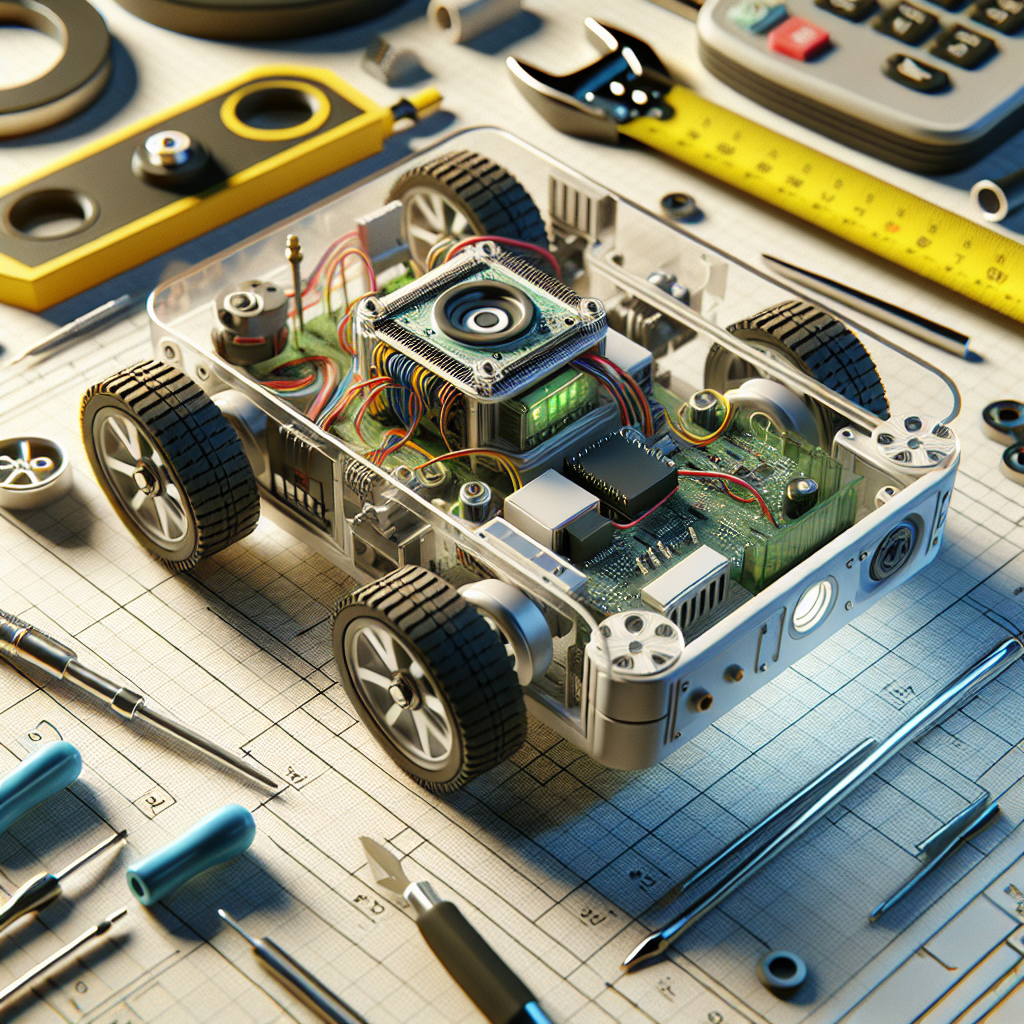
A $200 Roomba and a $75,000 Boston Dynamics Spot work on exactly the same fundamental principle: sense, think, act. This is the core of how do robots work—and once you see it, you can understand any robot, from a toy car that follows a line to a humanoid that walks and grasps. This robot technology explained guide is a practical introduction to robotics and basic robotics for beginners. If you’re not sure how to classify different machines, our guide to types of robots can help. Here you’ll get the universal framework behind how robots work, the key parts of a robot (sensors, controller, actuators), and real-world examples that show each principle in action. Whether you’re curious how your robot vacuum navigates or how a factory arm knows where to weld, the same ideas apply.
What Makes Something a Robot?
Robot vs Machine vs Appliance
A robot senses its environment, processes that information, and acts on the world. That’s the definition that separates robots from ordinary machines. A washing machine is programmable—you set a cycle and it runs—but it doesn’t sense the load or the world around it and then decide what to do. A robot, in the technical sense, does: it takes in data (from sensors), runs it through a controller or program (the “think” step), and then moves or changes something in the physical world (act). A Roomba is a robot because it senses the room with LiDAR or cameras, builds a map, decides where to go next, and drives its wheels accordingly. A dishwasher is not—it just runs a fixed program. So “how do robots work” always comes down to that loop: sense, think, act.
The Three Qualities Every Robot Has
Every robot has three kinds of hardware: sensors (input), a processor or controller (decision-making), and actuators (output—motors, arms, grippers, wheels). Sensors are like our eyes, ears, and touch: they gather data about the world. The controller is like the brain: it takes that data and decides what to do. Actuators are like our muscles: they carry out the decision by moving. The complexity of each part varies enormously—a toy robot might have a couple of light sensors and a single motor, while a humanoid has dozens of sensors and actuators and a powerful computer—but the pattern is the same. If something doesn’t sense, think, and act, it’s not a robot; it’s just an automated machine.
The Sense-Think-Act Cycle
Sense — How Robots Perceive the World
Robots perceive the world through sensors. Different sensors give different kinds of information. LiDAR and ultrasonic sensors measure distance—how far away walls and obstacles are—so the robot can map a room or avoid collisions. Cameras provide vision: they can recognize objects, read text, or track people. Force and tactile sensors measure touch—how hard a gripper is squeezing, or whether the robot has bumped into something. IMUs (inertial measurement units, with accelerometers and gyroscopes) tell the robot its orientation and motion—essential for balance in walking robots or stability in drones. Every robot uses some combination of these; the mix depends on the task.
For a deep dive into each sensor type and how they’re used in real robots, see our guide to Robot Sensors and Perception.
Think — How Robots Process Information
The “brain” of a robot is its controller—the computer that reads sensor data and decides what to do. Simple robots use a microcontroller (like an Arduino): a small, cheap chip that runs a single program and talks directly to sensors and motors. More capable robots use a single-board computer (like a Raspberry Pi) that can run full operating systems, handle camera images, and use AI. Industrial robots often use a PLC (programmable logic controller) or a dedicated robot controller that guarantees real-time response. The most advanced robots—humanoids, self-driving systems—use powerful onboard computers (e.g., NVIDIA Jetson) or even cloud connectivity for heavy AI. In every case, software takes the sensor inputs, applies logic or learned behavior, and sends commands to the actuators. That’s the “think” step.
Act — How Robots Interact With the World
Actuators are what make the robot move. They convert energy (usually electrical) into physical motion. The most common actuators are electric motors: DC motors for wheels and propellers, servo motors for precise angular position (robot arms, legs, grippers), and stepper motors for accurate rotation. Industrial robots also use hydraulic or pneumatic actuators for high force or speed. The robot’s “act” step is whatever its actuators do—spin wheels, bend a joint, open a gripper, fire a thruster. The complexity ranges from a single motor in a line-following toy to dozens of joints in a humanoid.
For details on motor types, torque, and how different robots move, see our technical guide to Robot Motors and Actuators.
Inside a Robot — Key Components
Every robot is built from a few core pieces. Robot components explained simply: you need something to sense (sensors), something to decide (the controller), something to move (actuators), and power to run it all. Robotics explained at the hardware level comes down to these parts of a robot and how they connect. Below we go through each in turn.
The Controller (Brain)
The controller is the computer that runs the robot’s software. For hobbyist and educational robots—like those built by beginners—the choice usually starts with a microcontroller (e.g., Arduino, ESP32) for simple, low-cost control. For more advanced projects requiring vision or high-level AI, a single-board computer (Raspberry Pi, NVIDIA Jetson) is the standard. Industrial robots use dedicated PLCs or vendor controllers that guarantee real-time, deterministic response for safety and precision. IEEE Robots Guide and similar resources describe how different controller tiers map to different applications. Some systems offload heavy computation to the cloud, but that adds latency, so time-critical decisions (like balance or collision avoidance) usually stay on the robot. The tradeoff is always processing power and flexibility vs cost, size, and power consumption.
Sensors (Senses)
Sensors fall into broad families: proximity and distance (ultrasonic, infrared, LiDAR), vision (cameras, depth cameras), force and touch (force/torque sensors, tactile sensors), and position and orientation (encoders on joints, IMUs, GPS). Simple robots might use only a few—for example, an Arduino car with two IR sensors for line following. Complex robots fuse many sensors (sensor fusion) to build a rich picture of the environment. Sensors are the bottleneck for many applications: a robot is only as good as what it can sense, so choosing the right sensors is critical.
Actuators (Muscles)
Actuators turn electrical (or hydraulic/pneumatic) signals into motion. DC motors are simple and cheap, used for wheels and fans. Servo motors add position feedback so the robot can control exact angles—essential for arms and legs. Stepper motors move in precise steps without feedback, common in 3D printers and CNC. Industrial arms use high-performance AC servos; humanoids and quadrupeds use custom actuators that balance torque, speed, and weight.
Power Supply (Energy)
Robots need power. Most consumer and mobile robots use rechargeable lithium batteries (LiPo, Li-ion)—the same technology in phones and laptops. Runtime is a tradeoff: bigger batteries last longer but add weight and cost. Industrial robots are usually plugged into mains power; they don’t move around, so a cable is fine. Space and outdoor robots sometimes use solar panels or, in space, nuclear (RTG) for long missions. Power constrains what a robot can do: more sensors and processors draw more current, so designers balance capability with battery life. SparkFun and Adafruit offer tutorials on battery selection and power management for hobby robots.
Communication Systems
Robots often need to talk to the outside world: a human operator, an app, or other robots. That happens over WiFi, Bluetooth, radio (e.g., RC), or wired connections. In research and advanced applications, ROS (Robot Operating System) provides a standard way for multiple programs and devices to exchange messages (topics, services). Communication can be for teleoperation (a human driving the robot), monitoring (sending video or status), or coordination (swarm robots sharing data). Not every robot is connected—many run fully onboard—but connectivity is increasingly common for setup, updates, and cloud AI.
How Robots Are Programmed
From Simple Rules to Artificial Intelligence
Robot behavior can range from dead simple to highly adaptive. At one end, hard-coded rules: “if sensor left sees line, turn right.” Next come state machines and behavior trees that organize more complex logic. Then classical planning and path planning algorithms that compute sequences of actions. Modern robots increasingly use machine learning: they learn from data or trial and error (reinforcement learning) instead of being hand-programmed for every situation. The cutting edge uses foundation models and large language models for high-level reasoning and natural language. For how AI fits into robotics, see our guide to AI in robotics; for programming languages and tools, see robot programming explained.
Programming Languages Used in Robotics
Python is the most popular language for beginners, research, and prototyping—it has great libraries for vision (OpenCV), ML (TensorFlow, PyTorch), and ROS. C++ is used when performance and real-time matter (industrial robots, drones, embedded). Many industrial robots use proprietary languages (e.g., RAPID for ABB, KRL for KUKA) or teach pendants where the operator moves the robot and the system records the motion. Educational robots often use visual or block-based coding (Scratch, Blockly) so kids can program without typing code. The choice depends on the platform and the level of control you need.
Levels of Robot Autonomy
Teleoperated
Teleoperated robots are controlled in real time by a human. The human sees through the robot’s cameras (or other sensors) and sends commands—move forward, turn, grip. Surgical robots like the da Vinci are teleoperated: the surgeon sits at a console and the robot mirrors their hand movements with precision and filtering. Bomb-disposal and underwater ROVs are also typically teleoperated. The robot has sensors and actuators, but the “think” step is the human; the robot is a remote body.
Semi-Autonomous
Semi-autonomous robots handle routine tasks on their own but rely on a human for exceptions or high-level decisions. Most industrial robots are semi-autonomous: they run a programmed sequence but a human starts them, loads parts, and handles errors. Many consumer robots are too: a robot vacuum navigates and cleans on its own but you set schedules and empty the bin. Level 2–3 self-driving cars are semi-autonomous—they can steer and brake in certain conditions, but the driver must stay ready to take over.
Fully Autonomous
Fully autonomous robots operate without a human in the loop. Mars rovers have to be autonomous because the communication delay to Earth is too long for real-time control—they sense, think, and act on their own. Advanced warehouse AMRs and some delivery robots are designed to work fully autonomously in defined areas. Humanoids and self-driving cars are moving toward full autonomy but aren’t there yet in general environments. Full autonomy requires robust sensing, reliable decision-making, and often AI that can handle unexpected situations.
Real-World Examples — The Cycle in Action
How a Robot Vacuum Navigates Your Home
A robot vacuum illustrates sense-think-act clearly. Sense: It uses LiDAR and/or cameras to measure distances to walls and obstacles and to detect drops (stairs). Some models also use cliff sensors and bump sensors. Think: Onboard software builds a map (SLAM—simultaneous localization and mapping), plans coverage paths, and decides when to avoid obstacles or return to the dock when the battery is low. Act: Wheel motors move the robot; a brush motor runs the vacuum. The cycle repeats many times per second: sense the room, update the map, choose the next move, drive. That’s how a Roomba or Roborock gets around your house without a human steering it.
How a Humanoid Robot Walks
Walking is much harder than rolling. A humanoid must sense its posture (joint angles from encoders), balance (IMU for orientation and acceleration), and contact with the ground (force sensors in the feet). The think step is a balance and gait controller that runs at hundreds of Hertz—it continuously computes how to shift weight and move each leg so the robot doesn’t tip over. Then it acts by sending torque commands to the leg motors. One wrong move and the robot falls; that’s why humanoid walking has taken decades to get right. Companies like Boston Dynamics and Tesla are now achieving robust walking by combining better actuators, sensors, and control algorithms.
How a Surgical Robot Operates
A da Vinci-style surgical robot is teleoperated but still follows the pattern. Sense: The robot has a stereo camera inside the patient and may have force/torque sensors on the instruments. The surgeon sees the 3D view and feels (through haptics, in some systems) what the instruments encounter. Think: The surgeon’s brain does the decision-making; the control system translates the surgeon’s hand movements into scaled, filtered motions of the instruments—reducing tremor and enabling sub-millimeter precision. Act: Small precision actuators move the surgical tools. So the “think” is human, but the sense and act are robotic, and the overall loop (see, decide, move) is the same.
FAQ
What is the sense-think-act cycle?
The sense-think-act cycle is the universal framework for how does a robot work: they (1) sense the environment with sensors, (2) process that information in a controller (think), and (3) take physical action with actuators (act). The cycle repeats continuously—often hundreds or thousands of times per second—so the robot can react to a changing world. Every robot from a toy to a humanoid uses some form of this loop. In short, what makes a robot work is having all three—sensing, thinking, and acting—in a loop.
What is the brain of a robot?
The “brain” of a robot is its controller—the computer that runs the software. It might be an Arduino microcontroller for a simple robot, a Raspberry Pi or NVIDIA Jetson for one that needs more computation or AI, or an industrial PLC or dedicated robot controller in a factory. The brain reads sensors, runs the control logic or AI, and sends commands to the motors and other actuators.
Can robots think for themselves?
It depends what you mean. Robots can make decisions based on sensor data and programmed or learned behavior—so in that sense they “think” in that they choose actions. AI robots can also learn from experience. But they don’t have consciousness, emotions, or true understanding in the way humans do; they’re running algorithms. So they think in the sense of computation, not in the sense of subjective experience.
How do robots know where they are?
Robots use a combination of sensors. LiDAR and cameras can build a map and match the robot’s view to the map to estimate position (SLAM). Wheel encoders measure how far the wheels have turned for dead reckoning. IMUs measure orientation and acceleration. GPS gives global position outdoors. Indoor or in space, GPS isn’t available, so robots rely on mapping, landmarks, and sometimes beacons or markers. Sensor fusion combines multiple sources for a more accurate estimate.
What is the difference between a robot and AI?
AI is software that can learn, reason, or make decisions—it can run on a phone, a server, or inside a robot. A robot is a physical machine that senses, processes, and acts in the world. A robot can use AI (e.g., a humanoid with a neural network for balance), and AI can exist without any robot (e.g., ChatGPT). So they’re different ideas: one is intelligence, the other is embodied automation. Many modern robots do use AI to improve perception and decision-making. For a full breakdown, read our explainer on robot vs bot vs AI.
How are robots powered?
Most consumer and mobile robots use rechargeable lithium batteries (LiPo or Li-ion). Industrial robots are usually plugged into mains power. Space robots use solar panels or nuclear (RTG) for long missions where recharging isn’t possible. Some outdoor or research robots use solar plus batteries. Power limits how long a robot can run and how much computation and actuation it can do before recharging.
What programming language do robots use?
Python and C++ are the most common. Python is popular for research, education, and prototyping; C++ for performance-critical and embedded systems. Industrial robots often use proprietary languages from the manufacturer. Educational robots use Scratch, Blockly, or similar block-based languages. ROS (Robot Operating System) supports both Python and C++ and is widely used in research and industry.
How fast can robots react?
It depends on the robot. Industrial arms can respond in milliseconds for safety and precision. Autonomous cars need to process sensor data and decide in tens of milliseconds. The limit is usually the sensor update rate (how often you get new data) and the processing time (how long the controller takes to compute the next action). Faster sensors and faster computers allow faster reaction, but there’s always a delay—and for safety-critical systems, that delay must be small and predictable.
Do all robots use the same kind of sensors?
No. Robots use different sensors depending on the task and environment. A line-following robot might need only two infrared sensors; a robot vacuum uses LiDAR or cameras for mapping; a humanoid uses joint encoders, IMUs, force sensors, and cameras. Industrial arms rely heavily on encoders for position and sometimes force sensors for assembly. So the “sense” step is implemented in many different ways—the principle (gather data about the world) is the same, but the hardware varies.
What is the difference between a robot and a remote-controlled toy?
A remote-controlled (RC) toy has sensors and actuators, but the “think” step is the human operator: you decide every turn and speed. A robot has onboard processing that makes at least some decisions autonomously—for example, a robot vacuum decides its own path; an RC car does not. So the line is: if the machine can sense and act on its own decisions (even in a simple way), it’s a robot. If a human is making every decision in real time, it’s teleoperated or remote-controlled, not autonomous. Many real robots support both modes: you can drive them manually or let them run autonomously.
Conclusion
Every robot, regardless of size or cost, runs on the same idea: sense, think, act. The complexity varies—from a few sensors and one motor to dozens of joints and powerful AI—but the principle is universal. Once you see that pattern, you can look at any robot and ask: what does it sense? how does it decide? what does it do? and you’ll have a framework for understanding it.
To go deeper, explore how robot hardware works in detail or continue your journey in the Robot Learning Center. We recommend starting with our foundational pillar What is a Robot? to understand the history and logic behind these machines, or exploring our deep-dives into sensors and motors. The best way to really understand how robots work is to build one.