
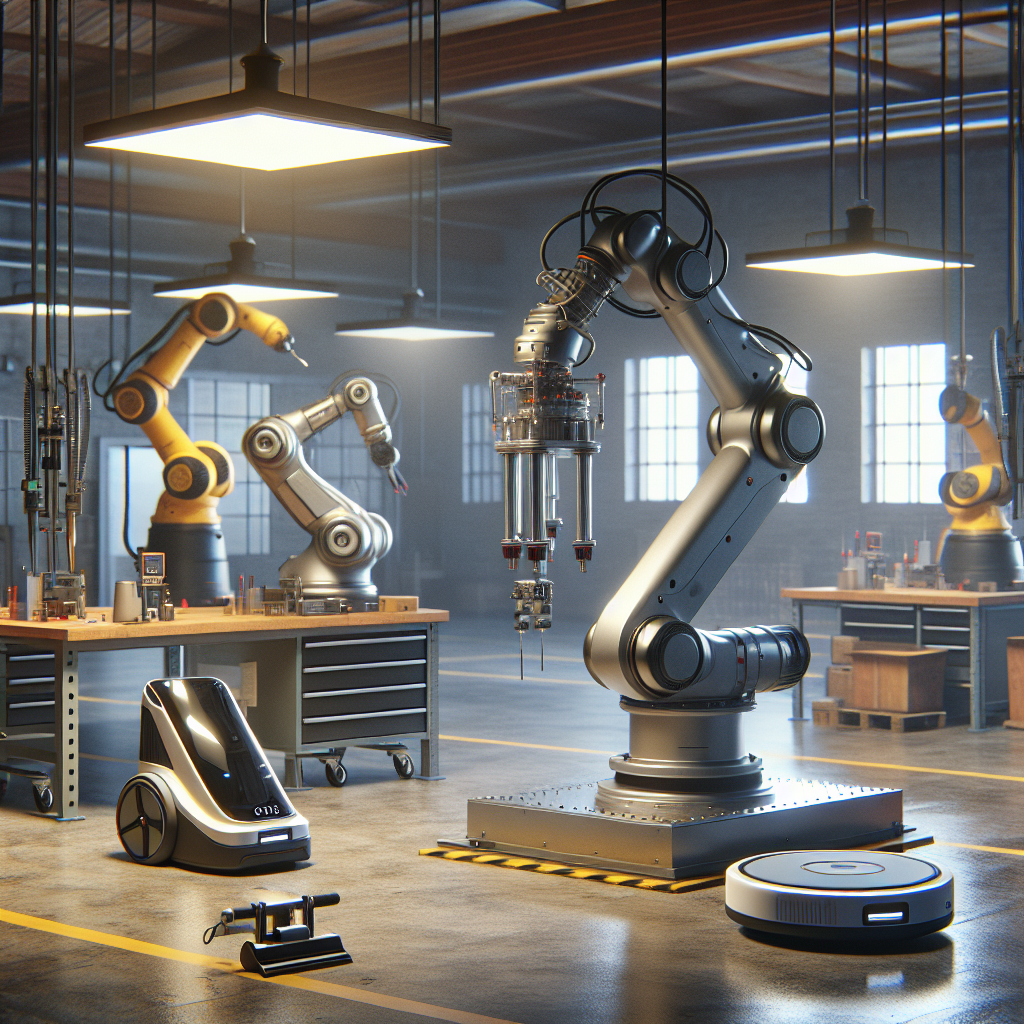
Most people think “robot” means either a factory arm or a humanoid—but there are over 14 distinct IEEE Robots Guide — types of robots working in the world right now, from the companion robots you can buy for your desk to the Perseverance rover on Mars. Understanding robot types is the foundation of understanding robotics: it’s how engineers, researchers, and everyday users classify these machines (see also the broad robot overview). In this guide, you’ll get every major robot category with clear definitions, real-world examples, key characteristics, and where each type is headed in 2026 and beyond. Whether you’re comparing a Roomba to an industrial arm or wondering how humanoids fit alongside drones and cobots, this taxonomy will help you make sense of the landscape.
Quick reference: the main robot categories are industrial (articulated, SCARA, delta, cartesian, cobots), mobile (AMRs, AGVs, legged), consumer (vacuums, mops, companions), humanoid, medical (surgical, rehab), aerial (drones), underwater (ROVs, AUVs), space (rovers, arms), plus soft robots, swarm robots, and agricultural robots. Below we break each down with examples so you can see different types of robots and what they do.
How Robots Are Classified
Robot classification and robot categories help us make sense of the many kinds of robots in use today. Below we break down the main ways to group them—by structure, mobility, application, and autonomy—so you can see types of robots and their uses at a glance.
By Mechanical Structure
Robots are often classified by workspace geometry and structure. Robot glossary terms like articulated, SCARA, delta, and cartesian describe how the arm or body is built. Degrees of freedom (DOF)—the number of independent ways the robot can move—is the key metric. Articulated arms have 4–7 axes and can reach around obstacles; SCARA robots offer horizontal flexibility and vertical rigidity for fast, repeatable motion in a plane; delta robots use a parallel kinematic “spider” structure for very high speed in a compact volume; cartesian (gantry) robots move along linear X, Y, Z axes and scale easily to large work cells. These structural types determine what jobs each robot can do, where it can reach, and how much it can carry—payload and repeatability vary widely by type.
By Mobility Type
Stationary robots (industrial arms) are fixed to a floor or table. Wheeled or tracked robots include AMRs (autonomous mobile robots) and AGVs (automated guided vehicles) in warehouses and factories. Legged robots include bipeds (humanoid), quadrupeds (dog-like), and hexapods. Aerial robots are drones and UAVs; aquatic robots are ROVs (remotely operated) and AUVs (autonomous underwater vehicles). Mobility type dictates where the robot can go and how it handles terrain.
By Application Domain
Robots are grouped by application domain: industrial (manufacturing, welding, assembly), consumer (home vacuums, mowers, companions), medical (surgery, rehab, eldercare), military and defense, space exploration, agricultural, and education. Many robots span domains—for example, a humanoid can be both industrial and research.
By Autonomy Level
Teleoperated robots are controlled in real time by a human (e.g., surgical robots, bomb disposal). Semi-autonomous robots handle routine tasks with human intervention for exceptions (many industrial and consumer robots). Fully autonomous robots operate independently—Mars rovers must be autonomous because of communication delay; advanced AMRs and humanoids are moving toward full autonomy. This spectrum is shifting toward AI-driven autonomy across all categories.
Industrial Robots
According to the International Federation of Robotics (IFR), industrial robots form the largest segment by installed base and revenue. They are classified by mechanical structure and task. IFR statistics describe scale and trends; the structural categories above are what define the machines themselves.
Articulated Robots
Articulated robots are the most common industrial type. They have 4–7 axes (joints) and look like a human arm, with a serial chain of links and joints that can bend and rotate. Used for welding, painting, assembly, and material handling, they are the workhorse of automotive and general manufacturing—you’ll find them in body shops, paint booths, and assembly lines worldwide. Major makers include FANUC, ABB, and KUKA, with payloads ranging from a few kilograms to over a ton. Articulated arms offer a large workspace and high payload capacity and can reach into tight spaces; the tradeoff is complexity, programming effort, and cost compared to simpler cartesian or SCARA designs.
SCARA Robots
SCARA (Selective Compliance Assembly Robot Arm) robots are built for speed and precision in the horizontal plane. They have horizontal flexibility and vertical rigidity, making them ideal for fast pick-and-place, electronics assembly, and packaging. SCARAs are typically faster than articulated robots for planar tasks but have a more limited workspace.
Delta Robots
Delta robots use a parallel kinematic structure—three arms connected to a central platform—giving them a spider-like appearance. They are extremely fast and used in food packaging, pharmaceutical handling, and any application requiring very high speed in a confined workspace. They typically have 3–4 DOF and a limited payload.
Cartesian / Gantry Robots
Cartesian (or gantry) robots move along linear X, Y, Z axes. They are simple, precise, and scalable—think CNC machines and 3D printers. Cartesian robots are easy to program and maintain and can be built to cover very large work envelopes. They excel at stacking, palletizing, and precision placement.
Collaborative Robots (Cobots)
Collaborative robots (cobots) are designed to work alongside humans without safety caging. They are force-limited and often use torque sensors or current sensing to detect contact and stop or retract immediately. Universal Robots, FANUC CR series, and similar products have made cobots the fastest-growing segment in industrial robotics—small and mid-size manufacturers can deploy them without extensive safety infrastructure. Standards like ISO/TS 15066 define safety requirements (force and pressure limits, speed limits) for cobots. They are used in assembly, machine tending, inspection, and packaging where human and robot share the same space, with the human handling tasks that need judgment and the robot handling repetitive or heavy motions.
For a detailed breakdown of industrial automation systems, see our full guide on Robots in Manufacturing.
Mobile Robots
Autonomous Mobile Robots (AMRs)
AMRs navigate without fixed paths. They use LiDAR, cameras, and SLAM (simultaneous localization and mapping) to build a map of the environment and plan routes dynamically. Warehouse and logistics robots from Amazon, Locus Robotics, Fetch, and similar companies are AMRs—they move bins, pallets, and carts through facilities without following physical guides. They can reroute around obstacles, avoid people, and adapt when shelving or aisles change; unlike AGVs, they don’t rely on wires or tape on the floor. AMRs are increasingly common in e-commerce fulfillment, hospitals (delivering supplies), and manufacturing plants for just-in-time material delivery.
Automated Guided Vehicles (AGVs)
AGVs follow fixed paths—magnetic strips, wires, or painted lines. They are simpler and cheaper than AMRs and dominate in predictable factory and warehouse layouts. AGVs are ideal for repetitive point-to-point material movement where the environment doesn’t change.
Legged Robots
Legged robots—quadrupeds (four legs), bipeds (two legs), and hexapods (six legs)—offer terrain adaptability that wheels cannot: they can climb stairs, step over obstacles, and traverse mud, snow, or rubble. Boston Dynamics Spot and Unitree Go2 are quadrupeds used in inspection (oil and gas, utilities), research, and entertainment; Spot has been deployed for monitoring construction sites and hazardous areas. Bipedal humanoids like Boston Dynamics Atlas, Tesla Optimus, and Figure 02 are advancing toward industrial and consumer roles—walking, carrying objects, and using tools in human-scale environments. Legged robots are biologically inspired and can operate in spaces built for humans without modifying the environment, though they remain more complex and expensive than wheeled systems.
Consumer and Home Robots
Robot Vacuums and Home Maintenance
Robot vacuums (e.g., iRobot Roomba, Roborock, Ecovacs) are the largest consumer robot category by unit sales—millions ship each year. Robot mops (often combined with vacuum in one unit), robot lawn mowers (Husqvarna Automower, Mammotion), window cleaners, and pool cleaners extend the same idea: autonomous machines that maintain the home with minimal human intervention. This segment is highly competitive and increasingly uses LiDAR, cameras, and AI for navigation, object avoidance, and room mapping; high-end models support app control, scheduling, and integration with smart home systems. Prices range from budget units under $200 to premium models over $1,000.
Companion and Social Robots
Companion and social robots are designed for emotional interaction and engagement. Examples include Eilik, Cozmo, Loona, and Vector—AI-powered desk companions that respond to voice and touch. This category overlaps with educational and toy robots but targets adults and families. For a curated list of options, see our guide to best robot toys for adults.
Educational and Toy Robots
STEM kits, coding robots, and programmable toys (e.g., LEGO Mindstorms alternatives, Arduino-based kits) form the educational and toy segment. They are used in schools and at home to teach programming, electronics, and problem-solving. Many link to the broader “build your own robot” and how robots work learning path.
Humanoid Robots
What Makes a Robot Humanoid
A humanoid robot has a human-like form: bipedal locomotion, arms with hands or grippers, and often a head with sensors (cameras, microphones). The form factor matters because our world—stairs, doors, tools, vehicles, workstations—is built for human bodies; a humanoid can in principle use the same infrastructure without redesigning factories or homes. Humanoids aim to operate in the same spaces and use the same equipment as people, enabling potential applications from warehouse picking and assembly to eldercare and hospitality. Balance and walking are technically demanding, which is why humanoids have lagged behind wheeled and quadruped robots, but advances in actuation and control are closing the gap.
Leading Humanoid Robots in 2026
Notable humanoids include Tesla Optimus, Figure 02, 1X NEO, Boston Dynamics Atlas (electric version), and Agility Robotics Digit. Some are in pilot deployments in factories and logistics; others remain in R&D. This category is evolving rapidly with advances in actuation, balance control, and AI.
Medical and Surgical Robots
Surgical Systems
Surgical robots like the da Vinci system (Intuitive Surgical) and Stryker Mako enable minimally invasive surgery with enhanced precision and dexterity. The surgeon controls the robot from a console, viewing a 3D image from the robot’s cameras; the system translates hand movements into scaled, filtered, steady motions of instruments inside the patient, reducing tremor and allowing access through small incisions. These systems are teleoperated—the surgeon is in the loop at all times—but the robot provides sub-millimeter precision, wristed instruments that bend like a human wrist, and high-definition 3D vision. Thousands of da Vinci systems are installed globally for procedures in urology, gynecology, general surgery, and more.
Rehabilitation and Assistive
Rehabilitation robots and exoskeletons (e.g., Ekso Bionics, ReWalk) help patients recover mobility after stroke or injury. Physical therapy robots and eldercare robots (e.g., Paro) support long-term care. This vertical is growing as populations age and demand for assistive technology increases.
Explore the full impact of medical technology in our specialized report on Robots in Healthcare.
Aerial Robots (Drones)
Consumer and Commercial Drones
Drones (UAVs) are aerial robots—they sense (GPS, IMU, cameras), process (flight controller), and act (motors and propellers). Consumer and commercial drones from DJI and others are used for photography, videography, inspection (power lines, roofs, wind turbines), agriculture (spraying, mapping, crop health), and delivery trials (Wing, Zipline, Amazon Prime Air). They use GPS, IMUs, and cameras for stabilization, navigation, and obstacle avoidance. FAA and other national regulations govern where and how they can fly (altitude limits, no-fly zones, registration, and in many cases remote ID); commercial operators often need certifications. The line between consumer and professional drones is blurring as capabilities improve.
Military and Defense Drones
Military and defense drones range from small reconnaissance units to large armed systems. They raise important ethical and legal questions about autonomy and lethal force—topics that overlap with robot ethics and safety standards (IEEE Spectrum and other outlets cover these developments).
Underwater Robots
ROVs and AUVs
ROVs (remotely operated vehicles) are tethered and controlled by an operator on a ship; they are used in deep-sea exploration, pipeline and cable inspection, marine research, and offshore oil and gas. The tether supplies power and carries video and control signals. AUVs (autonomous underwater vehicles) operate without a tether and follow preprogrammed or adaptive missions—they surface or use acoustic modems to report data. Underwater robotics faces unique challenges: pressure at depth, corrosion, and limited communication (no GPS, no radio; acoustics are slow and bandwidth-limited). Applications include oceanography, marine biology, seabed mapping, and defense (mine countermeasures, surveillance).
Space Robots
Planetary Rovers
Planetary rovers like NASA’s Perseverance and Curiosity navigate Mars autonomously because of the long communication delay with Earth—commands can take minutes to arrive, so the rover must avoid hazards and choose paths on its own. They use cameras, LiDAR, and onboard AI for hazard detection, path planning, and sometimes sample selection. Rovers have driven the development of autonomous navigation and sample collection in extreme environments; Perseverance is caching samples for a future sample-return mission. Similar robotics will support lunar exploration (NASA’s VIPER, commercial landers) and future missions to moons and asteroids.
Orbital Robotics
Orbital robotics includes the Canadarm2 and Dextre on the International Space Station—robotic arms used for berthing spacecraft, maintaining the station, and handling payloads. Satellite servicing missions are extending the idea of robots that repair and refuel satellites in orbit.
Emerging Categories
Soft Robots
Soft robots use flexible materials (silicone, fabric, compliant structures) and often pneumatic or hydraulic actuation instead of rigid motors. They can grip delicate objects (fruit, tissue) without damage, squeeze through confined spaces, and interact safely with humans because they give on contact. Applications include medical devices (surgical tools, wearables), exploration (underwater or in disposal zones), and handling of fragile items in logistics. Festo’s BionicFinWave and similar projects illustrate the field; research is active in soft grippers, crawling robots, and wearable exoskeletons.
Swarm Robots
Swarm robots achieve collective behavior from many simple units following local rules—inspired by insect colonies, flocks of birds, or schools of fish. No single robot has a full map; coordination emerges from sensing neighbors and the environment. Research focuses on coordination algorithms, scalability (adding or losing robots), and robustness to failures. Applications are still emerging in agriculture (distributed monitoring), search and rescue (covering large areas), and environmental monitoring; some demos use dozens of small ground or aerial robots.
Agricultural Robots
Agricultural robots perform crop monitoring, weeding, harvesting, and spraying—reducing labor and chemical use while improving yield. Precision agriculture uses GPS, vision, and AI to treat only where needed (e.g., spot-spraying weeds) or to pick ripe fruit. The segment is growing as labor shortages and sustainability pressures drive automation; examples include autonomous tractors, strawberry harvesters, and weeding robots that distinguish crops from weeds. Greenhouse and indoor farming are also adopting mobile and fixed robots for seeding, watering, and harvesting.
Comparison Table — All Robot Types at a Glance
| Category | Typical DOF | Mobility | Autonomy | Key Application | Example | Price Range |
|---|---|---|---|---|---|---|
| Articulated industrial | 4–7 | Stationary | Semi | Welding, assembly | FANUC, ABB | $25K–$500K+ |
| SCARA | 4 | Stationary | Semi | Pick-and-place, electronics | EPSON, Stäubli | $15K–$80K |
| Delta | 3–4 | Stationary | Semi | Packaging, pharma | FANUC, ABB | $20K–$100K |
| Cobot | 4–7 | Stationary | Semi | Assembly, tending | Universal Robots | $25K–$50K |
| AMR | — | Wheeled | Full | Warehouse, logistics | Amazon, Locus | $20K–$80K |
| Quadruped | 12+ | Legged | Semi–Full | Inspection, research | Spot, Go2 | $1.5K–$75K |
| Humanoid | 30+ | Legged | R&D | Future general purpose | Atlas, Optimus, Figure | $5K–$250K+ |
| Robot vacuum | — | Wheeled | Full | Home cleaning | Roomba, Roborock | $200–$1,500 |
| Companion | — | Wheeled/stationary | Semi | Desk companion | Eilik, Loona, Cozmo | $100–$400 |
| Surgical | 4–7 | Stationary | Teleop | Minimally invasive surgery | da Vinci | $500K–$2.5M |
| Drone | — | Aerial | Semi–Full | Photo, inspection, delivery | DJI, Wing | $500–$50K+ |
| Mars rover | Arm + wheels | Wheeled | Full | Planetary exploration | Perseverance, Curiosity | Mission: $100M–$2.7B |
FAQ
What type of robot is a Roomba?
A Roomba is a consumer mobile robot in the AMR (autonomous mobile robot) class. It uses LiDAR and/or cameras (depending on model) for navigation and mapping and operates fully autonomously to vacuum floors—you set a schedule or start it, and it finds its way back to the dock when done. So it’s both “consumer” (home use) and “mobile” (wheeled, moving around the environment) by application and mobility. Newer Roombas also avoid obstacles like cords and pet waste using onboard AI.
What is the most common type of robot?
By installed base, industrial articulated robots are the most common. By unit sales, consumer robot vacuums lead. So “most common” depends on whether you count factories or homes.
What type of robot is Spot from Boston Dynamics?
Spot is a quadruped mobile robot—four-legged locomotion. It’s used for inspection, research, and entertainment and can navigate stairs, uneven terrain, and spaces designed for humans. Boston Dynamics also makes the bipedal humanoid Atlas.
What is a cobot and how is it different from a regular industrial robot?
A cobot (collaborative robot) is designed to work alongside humans without safety caging. It is force-limited and often has sensors to detect contact and stop. Traditional industrial robots typically run behind fences. Cobots follow safety standards like ISO/TS 15066 so they can share workspace with people.
Are drones considered robots?
Yes. Drones are aerial robots. They sense the environment (GPS, IMU, cameras), process data (stabilization, navigation), and act (motors, propellers). So by the usual definition—sense, think, act—they are robots.
What types of robots use AI?
Increasingly all types use some form of AI. Robot vacuums use SLAM and object recognition; humanoids use whole-body control and learning; AMRs use path planning and obstacle avoidance. AI is most visible in mobile and humanoid categories but is spreading to industrial and consumer segments.
What is the difference between an AMR and an AGV?
AMRs (autonomous mobile robots) navigate dynamically using maps and sensors (LiDAR, cameras) and can reroute around obstacles. AGVs (automated guided vehicles) follow fixed paths (wires, tape, beacons) and don’t adapt to layout changes. AMRs are more flexible; AGVs are simpler and often cheaper for fixed routes.
Which type of robot is growing fastest?
Cobots are among the fastest-growing in industry. Humanoids are growing fastest in R&D and early deployment. Consumer robots (vacuums, mops, companions) lead in unit sales growth. The answer depends on segment.
What types of robots are used in hospitals?
Hospitals use surgical robots (e.g., da Vinci), logistics robots (delivery, pharmacy), disinfection robots (UV), rehabilitation exoskeletons, and telepresence robots. Social and companion-style robots are also used in eldercare and mental health settings.
Can one robot fit into multiple categories?
Yes. A humanoid cobot is both humanoid (form) and collaborative (safety and use case). Spot is both quadruped (legs) and mobile (it moves through the world). A robot vacuum is consumer, mobile, and often classified as an AMR. Many robots span application domains (e.g., research and industrial, or medical and assistive). Categories are useful for understanding and comparison, but real robots often sit at the intersection of several types—and that’s only becoming more common as platforms become more capable and flexible.
Conclusion
If you want how industrial arms and cobots actually land on production lines—not only how they are classified—our guide to robots in manufacturing covers deployment patterns, safety context, and typical workflows.
Robotics is a spectrum, not a single technology. From articulated arms on the factory floor to quadrupeds in the field and rovers on Mars, IEEE Robots Guide — types of robots are defined by structure, mobility, application, and autonomy. Understanding these categories is the first step to understanding the industry—and the blurring of categories (humanoids doing industrial work, consumer robots gaining AI, cobots moving from assembly to logistics) will only continue. New types will emerge as materials, AI, and use cases evolve; the taxonomy in this article gives you a stable framework to fit them into.
Next steps: learn how robots work under the hood—the sense-think-act cycle and the components that make every type possible. Or explore a specific category: humanoids, companion robots, or home robots—each has a growing body of content and products to discover. For a complete overview of foundations, visit the Robot Learning Center.