
Your guide to building, programming, and understanding robots — from your first Arduino kit to autonomous machines powered by AI.
Whether you’re a complete beginner wondering how to get started in robotics, a parent searching for the best STEM robot kits for your child, or a maker ready to build an autonomous obstacle-avoiding robot — you’ve found the right place.
Bring On The Robots is where curious builders learn real skills: electronics, coding, mechanical design, and the artificial intelligence that makes modern robots think for themselves.
What Is a Robot?
Every robot — from a $200 Roomba to a $75,000 Boston Dynamics Spot — works on the same principle: sense, think, act. Sensors collect data about the environment. A controller (microcontroller or single-board computer) processes that data. Actuators — motors, servos, pneumatics — execute the response.
This three-stage loop is the foundation of how robots work.
Once you understand the Sense-Think-Act Framework, you can understand any machine, from a line-following car to a humanoid robot that walks and grasps objects.
Your Robotics Learning Roadmap
Three phases take you from zero to building autonomous robots at home.
Phase 1: Choose Your Robot Platform
Start with an Arduino robot kit (~$30–$70) or a robot arm kit to learn circuits, wiring, and basic motor control. Arduino is ideal for beginner robot builders — no prior electronics experience required.
Phase 2: Learn to Program Robots
Master Python or C++ — the two dominant robot programming languages. Python for Raspberry Pi robot projects. C++ for Arduino robots and real-time control systems.
Phase 3: Build Autonomous Robots
Integrate ultrasonic, IR, and LiDAR sensors with machine learning and computer vision to create robots that navigate, map, and make decisions without human input.
Need the full plan? Read our Robotics for Beginners: 2026 Learning Roadmap or jump into the Build Your First Robot guide.
Best Robot Kits for Every Skill Level (2026)
Choosing the right robot kit matters more than choosing the right programming language. A good kit teaches electronics, coding, and mechanical assembly in one afternoon.
| Skill Level | Recommended Robot Kit | Platform | Price | What You’ll Learn |
|---|---|---|---|---|
| Beginner | Elegoo Smart Robot Car V4.0 | Arduino UNO | $60–$80 | Wiring, C++, ultrasonic sensors, Bluetooth |
| Kids 5–8 | Botley 2.0 Robot | Screen-free | $40–$60 | Sequencing, logic, problem-solving |
| Kids 8–12 | LEGO SPIKE Robot / Ozobot Evo | Scratch / OzoBlockly | $80–$350 | Block coding, sensor integration |
| Teens & Adults | Arduino Robot Kit + Sensors | Arduino / Pi | $50–$150 | C++/Python, circuit design, autonomy |
| Advanced | 3D Printed Robot + Pi + ROS | Pi 5 / ROS 2 | $150–$400+ | SLAM, computer vision, PID control |
Explore: Best Robot Building Kits | Best STEM Robot Kits by Age | Best Coding Robots
Understanding Robot Technology: Core Components
Every robot is built from the same core subsystems. Understanding these components is what separates tinkering from engineering.
🔧 Robot Actuators: How Robots Move
Robot motors and actuators are the muscles of every machine. DC motors drive robot wheels. Servo motors provide precise angular positioning for robot arms and grippers. Stepper motors deliver exact rotational control for CNC and 3D-printed robot parts. Choosing the correct actuator — considering torque, speed, precision, and load capacity — is critical in robot design.
📡 Robot Sensors: How Robots Perceive
Robot sensors provide environmental awareness. Beginners start with ultrasonic sensors (HC-SR04, ~$2) for distance measurement and infrared sensors for line-following robots. Intermediate builders add IMUs (accelerometer + gyroscope) for robot orientation and balancing. Advanced robots use LiDAR for 360° mapping. Sensor fusion via Kalman filtering is how real robots achieve reliable perception.
🧠 Robot Controllers: The Robot Brain
The two dominant robot controller platforms are Arduino (ATmega328P microcontroller, real-time sensor/motor control) and Raspberry Pi (ARM-based single-board computer, best for robot vision and running ROS 2). Many robots use both: Arduino for low-level motor control, Raspberry Pi for high-level robot planning.
💻 Robot Programming: How Robots Think
Robot programming spans block-based coding (Scratch, Blockly) for young robot builders through Python and C++ for production robot systems. The Robot Operating System (ROS 2) is the industry-standard middleware for robot navigation, SLAM, and multi-robot coordination. See our robot programming languages guide.
Types of Robots: From Industrial Arms to Humanoids
Understanding the types of robots helps you see where the field is heading — and where the opportunities are.
- Industrial Robots — Welding robots, painting robots, and pick-and-place robots in manufacturing. FANUC, ABB, and KUKA produce the world’s most deployed industrial robots across a $16.7B global market.
- Mobile Robots (AMRs) — Autonomous mobile robots from Amazon Robotics and Locus Robotics navigate warehouses using LiDAR-based SLAM.
- Medical Robots — The da Vinci surgical robot has assisted in over 2 million procedures. Robots in healthcare now include rehabilitation robots, hospital delivery robots, and UV disinfection robots.
- Humanoid Robots — Tesla’s Optimus robot, 1X NEO, Agility Digit, and Sanctuary Phoenix are leading the transition from research labs to factory floors.
- Space Robots — Mars rovers (Perseverance, Curiosity), the ISS Canadarm2 robotic arm, and orbital servicing robots explore where humans can’t go. See robots in space.
- Consumer Robots — Robot vacuums (Roomba, Roborock), robotic lawn mowers, and companion robots like Cozmo and Vector bring robotics into everyday homes.
Humanoid Robot Watchlist: Class of 2026
The next generation of humanoid robots is moving from prototypes to production. These are the robot platforms to watch.
| Robot | Manufacturer | Key 2026 Milestone | Application |
|---|---|---|---|
| Optimus Gen 2 | Tesla | 10kg payload precision | General Industrial |
| NEO | 1X Technologies | Home delivery robot pilots | Domestic / Consumer |
| Digit | Agility Robotics | Multi-level warehouse robot | Logistics / Sortation |
| Phoenix | Sanctuary AI | Advanced haptic robot control | Retail / Assembly |
| Atlas (Electric) | Boston Dynamics | Full-body robot manipulation | Research / Industrial |
Where Robots Are Used: Industry Applications
- Logistics Robots: Autonomous delivery robots, warehouse robots, and robotic pallet movers are transforming supply chains.
- Healthcare Robots: Surgical robots, rehabilitation robots, pharmacy robots, and eldercare companion robots are improving patient outcomes.
- Manufacturing Robots: Collaborative robots (cobots) work alongside humans for quality inspection, welding, and assembly.
- Exploration Robots: Underwater, mining, and planetary rover robots operate in environments too dangerous for humans.
Featured Robot Projects: Start Building Today
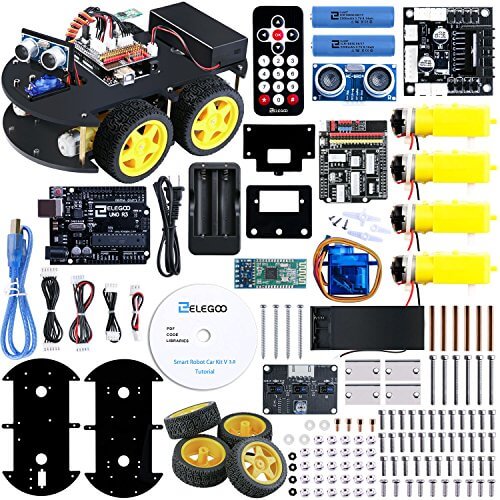
Elegoo Smart Robot Car V4.0
The most popular Arduino robot project on BOTR. This robot kit includes ultrasonic obstacle avoidance, IR remote control, line-following, and Bluetooth control. Arduino UNO R3, motor driver, sensors, chassis — everything to build your first robot for under $70. Read the full robot review →
More Robot Projects
- 5 Arduino Robot Projects — From your first motor test to a maze-solving robot.
- 4 Raspberry Pi Robot Builds — Robot motor control to robot vision with Python.
- 3D Printed Robots — Open-source robot designs: hexapod robots, robot hands, and quadruped walking robots.
- Cozmo & Vector Robot SDK — 5 Python robot projects: camera vision, face recognition.
Robot Learning Center: Deep-Dive Guides
Our robot knowledge base covers every topic in the robotics ecosystem. Each guide is written for clarity, accuracy, and practical application.
| Topic | Robot Guide | Best For |
|---|---|---|
| Foundations | How Do Robots Work? | Beginners — the robot sense-think-act cycle |
| Categories | Types of Robots | Industrial, mobile, consumer, humanoid, medical robots |
| Timeline | History of Robots | From ancient automata to modern robots |
| Pop Culture | Famous Robots | R2-D2, Spot, da Vinci — real and fictional robots |
| Software | Robot Programming | Robot languages, tools, ROS |
| Intelligence | AI in Robotics | How robots learn, see, and decide |
| Ethics | Asimov’s Laws of Robotics | Robot safety rules — fiction vs. reality |
| Terminology | Robot Glossary A–Z | Every robot term from actuator to waypoint |
| Definitions | Robot vs Bot vs AI | What makes a robot a robot |
| Learning | Learn Robotics Roadmap | Zero to building autonomous robots |
Frequently Asked Questions About Robots
Can I learn to build robots on my own at home?
Yes. Start with an Arduino robot kit (~$30), free online tutorials, and a programming language like Python or C++. Thousands of people with zero experience build their first robot every week. Our beginner robot roadmap walks you through every step.
How do robots work?
Every robot uses the sense-think-act cycle: robot sensors collect data, a robot controller processes it, and robot actuators produce motion. Learn the details in our How Do Robots Work guide.
Is Python or C++ better for programming robots?
Both are essential for robot programming. Python excels at robot vision and rapid prototyping on Raspberry Pi. C++ is required for real-time robot control on Arduino and in ROS 2. Most robot builders learn both. See our robot programming language comparison.
What’s the best first robot kit for adults?
The Elegoo Smart Robot Car V4.0 (~$65). This robot kit includes an Arduino UNO, motor driver, ultrasonic sensor, IR remote, and Bluetooth — everything to build an autonomous robot in one afternoon.
What are the best STEM robot kits for kids?
It depends on age. Botley 2.0 robot for ages 5–8 (screen-free). Ozobot Evo robot for ages 8–12 (color-code programming). LEGO SPIKE Prime robot for 12+ (Scratch and Python). Full breakdown: STEM Robot Kits by Age.
Will robots take my job?
Robots are transforming — not eliminating — jobs. Robots replace repetitive tasks while creating new roles in robot engineering, robot maintenance, and human-robot interaction. The World Economic Forum projects 97 million new roles created by automation by 2027.
What is ROS (Robot Operating System)?
ROS 2 is the open-source software framework used by most professional and academic robots worldwide. It provides tools for robot navigation, robot mapping (SLAM), robot perception, and multi-robot coordination. Learn more in our robot programming guide.
How much does it cost to build a robot?
As little as $30 for a basic Arduino robot kit. A complete robot car kit with sensors runs $50–$80. Raspberry Pi robot projects cost $80–$150. Advanced robots built with 3D printing and LiDAR can reach $300–$500+.
What is the difference between a robot, a bot, and AI?
A robot is a physical machine with sensors and actuators that interacts with the real world. A bot is software automation (chatbots, scrapers). AI is the intelligence layer — it can power both robots and bots. Full breakdown: Robot vs Bot vs AI.
Are robots smarter than humans?
Robots exceed human performance in narrow tasks — playing chess, visual inspection, repetitive assembly. But general reasoning, creativity, and adaptability remain firmly human strengths that robots cannot replicate. Explore in AI in Robotics.
Join the Bring On The Robots Community
We’re glad you’re here. Our mission is to be the most practical, honest, and comprehensive robot resource on the web — whether you’re building your first Arduino robot car or researching the humanoid robots that will transform industry.
Explore our robot guides, build something real, and join the thousands of makers, students, and engineers shaping the future of robotics.
Find out more about BOTR | Browse the Robot Learning Center | Send us feedback