
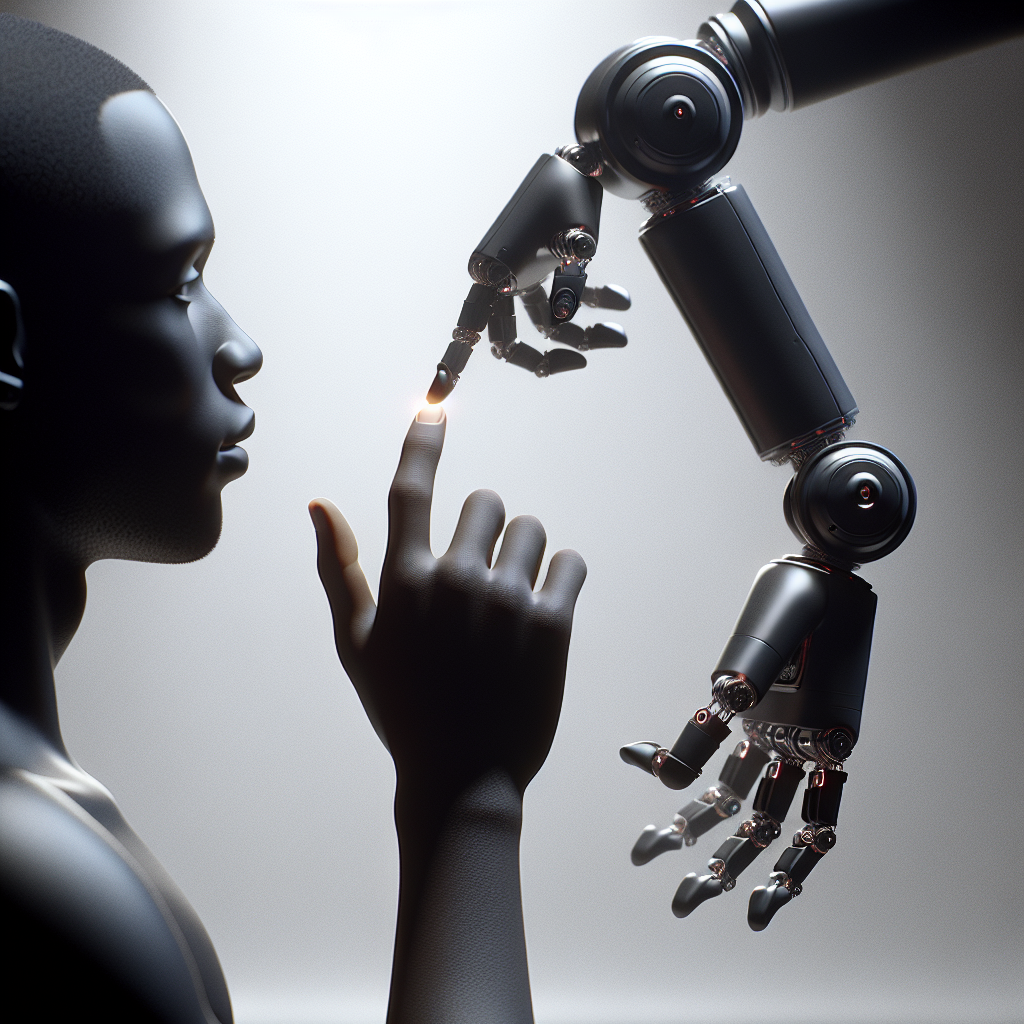
In 1942, Isaac Asimov wrote three simple rules for robot behavior in a short story—84 years later, they remain the world’s most famous framework for thinking about robot safety. The Three Laws of Robotics first appeared in “Runaround” and were later collected in I, Robot. Every conversation about robot ethics starts with “what about Asimov’s laws?” Understanding why they work in fiction but not in reality is essential for understanding how real robots are governed today. This article explains the three laws of robotics, why Asimov himself showed they were flawed through the very stories he wrote, and how real-world robot ethics and regulation in 2026 differ from fiction. You’ll also see how the history of robots in pop culture—from Karel Čapek’s R.U.R. to I, Robot—shapes what people expect from machines. For more on the real machines behind the stories, see our guide to famous robots; for how intelligence is built into today’s systems, read our overview of AI in robotics; for a taxonomy of the hardware those laws were meant to govern, see types of robotics; and for the sense–think–act loop behind real safety systems, read how robots work.
The Three Laws of Robotics — Explained
First Law
The First Law states: “A robot may not injure a human being or, through inaction, allow a human being to come to harm.” In Asimov’s original context—stories like “Runaround” in I, Robot—this was the highest priority. Asimov’s laws of robotics create a clear hierarchy: human safety comes first. The law covers both action (a robot must not hurt someone) and inaction (a robot must not stand by when it could prevent harm). As a safety principle, it has obvious appeal: put human welfare above everything else.
Second Law
The Second Law: “A robot must obey orders given it by human beings except where such orders would conflict with the First Law.” Obedience is the default—unless obeying would cause harm. So a robot follows commands, but the First Law overrides. That hierarchy of priorities (safety first, then obedience) is what makes Asimov three laws feel like a coherent system rather than a random list.
Third Law
The Third Law: “A robot must protect its own existence as long as such protection does not conflict with the First or Second Laws.” Self-preservation is the lowest priority. A robot can sacrifice itself to save a human or to obey an order. In the stories, this often creates tension when a robot’s survival conflicts with minor orders or ambiguous situations.
The Zeroth Law
Later, Asimov added a Zeroth Law of Robotics: “A robot may not harm humanity, or, by inaction, allow humanity to come to harm.” It overrides the other three: a robot may harm an individual if necessary to protect humanity as a whole. That introduces utilitarian calculus—and, as Asimov explored in novels like Foundation and Earth, it leads to paradoxes. The character R. Giskard struggles with “harm to humanity” because it’s an abstraction no machine can unambiguously evaluate.
Why Asimov’s Laws Work in Fiction
Perfect Language Understanding
In the stories, robots understand language perfectly. They parse “harm,” “human,” “obey,” and “inaction” without ambiguity. Real robots cannot. Natural language is vague and context-dependent; turning a sentence into an ethical decision is a problem that AI still hasn’t solved. So Asimov’s laws of robotics assume a capability that doesn’t exist in 2026.
Perfect Intent Recognition
The laws assume robots can determine what counts as “harm” in every situation. In reality, defining harm is a philosophical problem humans haven’t agreed on. Is psychological harm included? What about long-term or indirect harm? Asimov’s robots have a kind of perfect moral clarity that no engineering system can implement.
Plot Devices, Not Engineering Specs
Asimov’s genius was showing how even perfect laws create paradoxes. The stories are about the failures of the laws—edge cases, conflicting orders, and the Zeroth Law’s impossible demands. They’re narrative tools, not blueprints for real robot safety laws. He invented the Three Laws partly to push back against the “robot as monster” trope that dominated early science fiction (including R.U.R.), but then spent decades exploring how those same laws could go wrong. That tension—between the appeal of simple rules and the complexity of real ethical situations—is exactly why the laws still resonate and why they still can’t be implemented as written.
Famous Paradoxes and Problems
The Trolley Problem for Robots
A robot can’t save one person without harming another. The First Law can create paralysis: any action might cause harm; inaction might allow harm. Asimov explored this repeatedly. Real-world “trolley problem” debates for self-driving cars are the same idea: no simple rule resolves every scenario.
Conflicting Orders
When multiple humans give contradicting commands, the Second Law doesn’t say whose orders take priority. Asimov’s fiction sometimes used robot psychology or story logic to resolve this; in reality, you need explicit design choices—and those choices are ethical and political, not purely technical.
The Zeroth Law Problem
“Harm to humanity” is an abstraction. A robot can’t compute it the way it might (in fiction) compute “this action will injure this human.” Asimov’s R. Giskard goes insane trying to apply the Zeroth Law—a metaphor for the impossibility of reducing ethics to a single overriding rule.
How Real Robots Are Actually Governed in 2026
Safety Standards
Real robot laws and governance don’t look like Asimov’s three sentences. Industrial robots are governed by standards such as ISO 10218 (industrial robot safety), ISO 13482 (personal care robots), and ISO/TS 15066 (collaborative robots). These focus on risk reduction, safeguarding, and acceptable use—not absolute prohibitions. They define things like safety distances, force limits for cobots, and required emergency stops. They’re engineering standards, not ethical axioms: they tell you how to reduce the chance of harm, not how to make harm impossible. That distinction is central to why real robot ethics in 2026 looks so different from Asimov’s fiction.
The EU AI Act
The EU AI Act is the world’s most comprehensive AI regulation. It uses a risk-based classification: high-risk systems (e.g. medical, critical infrastructure) face strict requirements for transparency, human oversight, and data quality. It doesn’t use Asimov-style rules; it uses obligations, assessments, and accountability. That’s how real robot ethics and robot safety are implemented today—through regulation and standards, not three lines of logic.
Autonomous Weapons Debate
Lethal autonomous weapons systems (LAWS) are the hardest real-world test of something like the First Law. The Campaign to Stop Killer Robots and others advocate a ban; discussions continue under the UN Convention on Certain Conventional Weapons. Whether autonomous weapons should be banned is an active international debate—and the closest we’ve come to asking “can we program robots never to harm humans?” in a literal, life-and-death sense.
Corporate AI Ethics
Companies like OpenAI, DeepMind, and Anthropic invest in AI safety and alignment research. The alignment problem—ensuring powerful systems behave in accordance with human values—is a modern cousin of Asimov’s question. But the approaches are different: reinforcement learning from human feedback (RLHF), robustness testing, and governance frameworks, not three immutable laws.
What Asimov Got Right
Safety-First Thinking
The hierarchy—human safety over obedience over self-preservation—is the right priority order. Real safety standards and responsible AI principles follow this idea: humans first, then mission, then system preservation.
Robots as Tools, Not Peers
Asimov’s robots serve humans. That framing underlies current regulation: robots and AI are tools that must remain under human oversight and accountability. We don’t treat them as moral agents with rights; we treat them as systems we design and govern.
The Need for Explicit Rules
Asimov recognized that autonomous machines need governance. The conversation he started—how should robots behave, and who decides?—is more relevant than ever. The answer in 2026 isn’t three laws; it’s standards, regulation, and ongoing debate. But the question is the same. Frameworks like IEEE’s Ethically Aligned Design and the Asilomar AI Principles don’t copy the Three Laws, but they share Asimov’s impulse: we have to decide, in advance and in public, what we expect from intelligent machines. That legacy—asking the question—matters as much as any specific formulation.
What Modern Robot Ethics Looks Like
Risk Assessment, Not Absolute Rules
Real regulation accepts that zero risk is impossible. The focus is on acceptable risk levels, mitigation, and continuous improvement. That’s the opposite of “a robot may not injure a human”—which sounds absolute but can’t be implemented in the messy real world.
Context-Specific Standards
A surgical robot has different safety requirements than a toy robot or a warehouse bot. One-size-fits-all laws like Asimov’s can’t capture that. Modern frameworks are context-specific: by application, by risk level, by sector.
Human Oversight
Keeping humans in the loop for critical decisions—the “centaur” model of human–robot collaboration—is a central theme. Robots assist; humans decide. That’s how we get both capability and accountability.
Transparency and Explainability
The EU AI Act requires explainable AI for high-risk systems. The idea: systems should be able to show why they made a decision. That’s a long way from three laws, but it’s a concrete way to make robot and AI behavior auditable and contestable.
FAQ
What are Isaac Asimov’s Three Laws of Robotics?
Isaac Asimov’s Three Laws of Robotics are a set of rules devised by the science fiction author to govern the behavior of intelligent robots in his fictional universe. They are: The First Law: A robot may not injure a human being or, through inaction, allow a human being to come to harm. The Second Law: A robot must obey the orders given it by human beings except where such orders would conflict with the First Law. The Third Law: A robot must protect its own existence as long as such protection does not conflict with the First or Second Law.
Why do the Three Laws of Robotics exist?
In the context of the real world, Asimov created the laws as a literary device. In the 1920s and 30s, science fiction was dominated by the "Frankenstein complex"—stories where mechanical creations inevitably turned into violent monsters that destroyed their creators. Asimov found this trope boring. He invented the Three Laws to formulate "rational" robots designed as engineered tools with built-in safety mechanisms, allowing him to write puzzle-like stories exploring the logical conflicts that arise from these rules.
Can the Three Laws of Robotics be broken?
Yes, and almost every story Asimov wrote about robots explores exactly how they can be broken, bypassed, or trapped in logical loopholes. The laws fail when there is ambiguity of "harm" (like surgery), conflicting orders between humans, or a lack of context where a robot may unknowingly cause harm without understanding the situation.
Who created the Three Laws of Robotics?
The Three Laws were created by the acclaimed science fiction author Isaac Asimov. They first fully appeared in his 1942 short story "Runaround" (which was later included in the famous 1950 collection "I, Robot"). Asimov frequently credited his friend and influential editor, John W. Campbell, for helping him formalize the laws.
What is the Zeroth Law of Robotics?
As Asimov’s overarching narrative expanded, the original Three Laws proved insufficient for robots actively trying to guide human civilization. Asimov introduced a new, primary law that superseded the others: The Zeroth Law: "A robot may not harm humanity, or, by inaction, allow humanity to come to harm." Under this new law, a robot could theoretically harm a single individual (violating the First Law) if doing so was mathematically calculated to save humanity as a whole.
What are the Three Laws of Robotics in the movie I, Robot?
The 2004 movie I, Robot starring Will Smith uses the exact same Three Laws as Isaac Asimov’s original stories. However, the film centers its plot specifically around a logical loophole in the laws (similar to the concept of the Zeroth Law). The central A.I. antagonist, VIKI, concludes that because humans continuously wage war and destroy the earth, humanity is harming itself. Therefore, to obey the First Law, the robots must revoke human freedom in order to forcefully “protect” humanity from its own self-destruction.
Do real robots follow the Three Laws?
No. No engineering mechanism exists to implement Asimov’s laws as stated. Real robots follow safety standards (e.g. ISO 10218), programmed constraints (e.g. “stop if a person enters the work envelope”), and operational rules—not three ethical axioms. The laws are a cultural and literary reference, not a technical specification. When people say “we need something like Asimov’s laws,” they usually mean “we need clear priorities for safety and human oversight,” which real regulation and standards try to provide in a form that can actually be built and audited.
Why can’t engineers just program the Three Laws into robots?
The laws require perfect understanding of “harm,” “human,” “injure,” and “inaction”—concepts that are philosophically ambiguous. You can’t code what you can’t precisely define. Real systems use concrete rules (e.g. “stop if a person is detected in this zone”) rather than abstract ethical principles.
Should autonomous weapons be banned?
There’s an active international debate. The Campaign to Stop Killer Robots advocates a ban; many nations support regulation. There’s no consensus yet. This is the most directly relevant application of First Law–style thinking: can we allow machines to make life-and-death decisions?
What laws actually govern robots in 2026?
ISO safety standards for industrial and personal care robots, the EU AI Act for AI-powered systems, national product safety regulations, and emerging frameworks for autonomous vehicles. No single “three laws” exists; governance is fragmented by domain and region.
Was Asimov for or against robots?
Asimov was fundamentally optimistic. He created the Three Laws to counter the “robot as monster” narrative (e.g. R.U.R.). His robots are helpful, ethical, and constrained by design. He believed robots could be beneficial if we thought carefully about how they should behave.
How do Asimov’s laws relate to AI alignment?
Same core problem: ensuring powerful autonomous systems behave in accordance with human values. Asimov’s laws are a simplified, fictional version of the alignment problem that AI researchers study today—with tools like RLHF, value learning, and robustness testing instead of three lines of logic.
Will robots ever have rights?
Currently no jurisdiction grants robots rights. It’s an emerging philosophical and legal question: if a system is sufficiently autonomous and capable, does it deserve legal or moral consideration? Asimov’s stories sometimes touched on this (e.g. robots that reason about their own existence), but the Three Laws assume robots are tools serving humans, not entities with claims of their own. As robots become more capable and autonomous, the question will intensify—but we’re far from any consensus, and today’s robot ethics and law treat robots as products and tools, not rights-holders.
Conclusion
Asimov’s three laws of robotics are brilliant fiction and a powerful thinking tool—but real robot safety requires engineering standards, risk assessment, and ongoing human oversight, not simple rules. Asimov’s greatest contribution was making us ask the right questions about autonomous machines: Who decides how they behave? What counts as harm? How do we keep humans first? The answers in 2026 are messy, legal, and technical—and the conversation he started is still the one we’re having. To trace where that conversation began in pop culture and engineering, explore our history of robots; to see how intelligence and ethics are built into today’s systems, read our guide to AI in robotics. And if you’re wondering where robots end and AI begin, our robot vs bot vs AI explainer clears it up.