
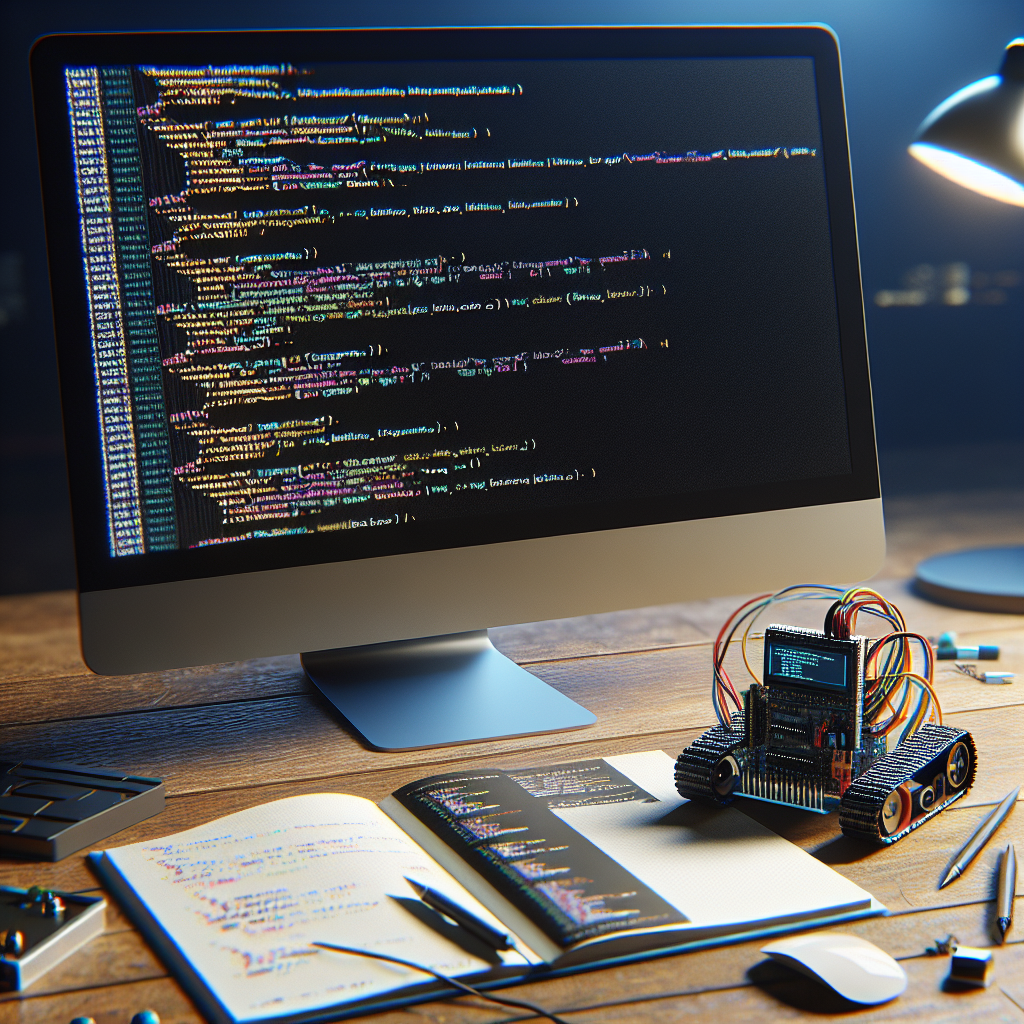
Every language brings something different to robotics — C++ gives speed, Python gives convenience, and choosing the wrong one first can waste months. From visual blocks to industrial C++, there are 8+ languages used in robot programming. This guide helps you pick the right one for your goals. You’ll get every major robotics programming language, when to use each, the recommended learning order, and a decision flowchart. Start coding with Arduino robot projects (C++) or Raspberry Pi projects (Python). Full beginner roadmap: robotics for beginners. Consumer SDK workflows (Python on desktop talking to a toy-class bot) are a specialty path—we link those at the end so this overview stays language-first.
ROS 2 Humble Crash Course — the industry-standard framework for robot programming.
The Robotics Programming Language Landscape
Visual/Block-Based
Scratch, Blockly, mBlock, OzoBlockly. Ages 5–12 and absolute beginners. Teach computational thinking without syntax. Stepping stone, not destination.
Arduino C/C++
The standard for microcontroller programming. Arduino C++ gives low-level hardware control. Steeper curve but huge community.
Python
Swiss Army knife of robotics. Used on Raspberry Pi, ROS 2, AI/ML, vision. Python is easiest text-based language; fast enough for most hobby and professional robotics.
MicroPython and CircuitPython
Python on microcontrollers. MicroPython is easier than Arduino C++ but less performance. Arduino Alvik, micro:bit, ESP32 support it.
ROS 2 (Python and C++)
Professional framework. Uses both Python and C++. SLAM, navigation, multi-robot. Industry standard.
MATLAB and Simulink
Academic and industrial simulation. Control design, modeling. Expensive; not beginner-friendly.
Emerging: Rust
Memory-safe, fast embedded. Growing but not mainstream yet for robotics.
Comparison Table
| Language | Curve | Speed | Hardware | Job Relevance | Best For |
|---|---|---|---|---|---|
| Scratch/Blockly | Easy | N/A | Limited | Low | Ages 5–12 |
| Arduino C++ | Moderate | High | Arduino, ESP32 | High | Hardware-first |
| Python | Easy | Medium | Pi, ROS, ML | High | AI/vision |
| MicroPython | Easy | Medium | Alvik, ESP32 | Growing | Easy MCU start |
| ROS 2 | Steep | High (C++) | Pi, PC, robots | Very high | Career |
| MATLAB | Steep | Medium | Simulation | Academic | Control theory |
| Rust | Steep | High | Embedded | Emerging | Safety-critical |
| Java | Moderate | Medium | FIRST, Android | Niche | FRC |
See Hackster.io for language usage in real projects.
Decision Flowchart — Which Language First?
Under 10? → Scratch/Blockly. Want electronics + hardware? → Arduino C++. Want AI/vision/smart robots? → Python (Pi). Easiest MCU start? → MicroPython. Career? → Python + C++ + ROS 2. Academic? → Python + MATLAB. Not sure? → Start with Arduino C++, add Python second.
The Recommended Learning Progression
Path A (Hardware-First): Arduino C++ → Python → MicroPython → ROS 2. Path B (Software-First): Python on Pi → Arduino C++ → ROS 2. Path C (Career): Python + C++ → ROS 2 → MATLAB if needed.
What Professional Roboticists Use
C++ for real-time control, Python for prototyping and ML, ROS 2 as the integration layer. Tesla, Boston Dynamics, NVIDIA use C++ and Python. ROS 2 is the common thread in startups and research.
FAQ
Is Python fast enough for robotics?
For hobby and most professional work: yes. For 10kHz+ real-time motor control: use C++.
Arduino C++ or Python first?
Arduino C++ if starting from scratch (hardware fundamentals). Python if you already know a language.
What is MicroPython? Is it replacing Arduino?
Python on microcontrollers. Growing but complementing Arduino, not replacing it.
Do I need multiple languages?
Eventually yes. Most roboticists use 2–3. Start with one.
Is Scratch “real” programming?
It teaches real concepts; skills transfer. Not used professionally.
What does ROS 2 use?
Both Python and C++. Beginners use Python; performance nodes use C++.
Can I do robotics with only JavaScript?
Limited. Johnny-Five exists but Python or C++ are better.
Is MATLAB necessary?
Useful for academic control/simulation. For hobby/startup: Python (NumPy, SciPy) often enough.
Will Rust replace C++?
Possibly long-term for safety-critical. Today: learn C++ first.
What about Java?
Used in FIRST and some Android robots. Not mainstream in pro robotics.
Conclusion
Start with Arduino C++ or Python depending on goals. Add the other second. ROS 2 when ready for industry-level work. No single language does everything. Start building with Arduino robot projects or Raspberry Pi projects. If you are targeting discontinued but still instructive desktop bots, our Cozmo and Vector SDK tutorial walks Python-to-robot APIs without mixing them into the core language ladder above.