
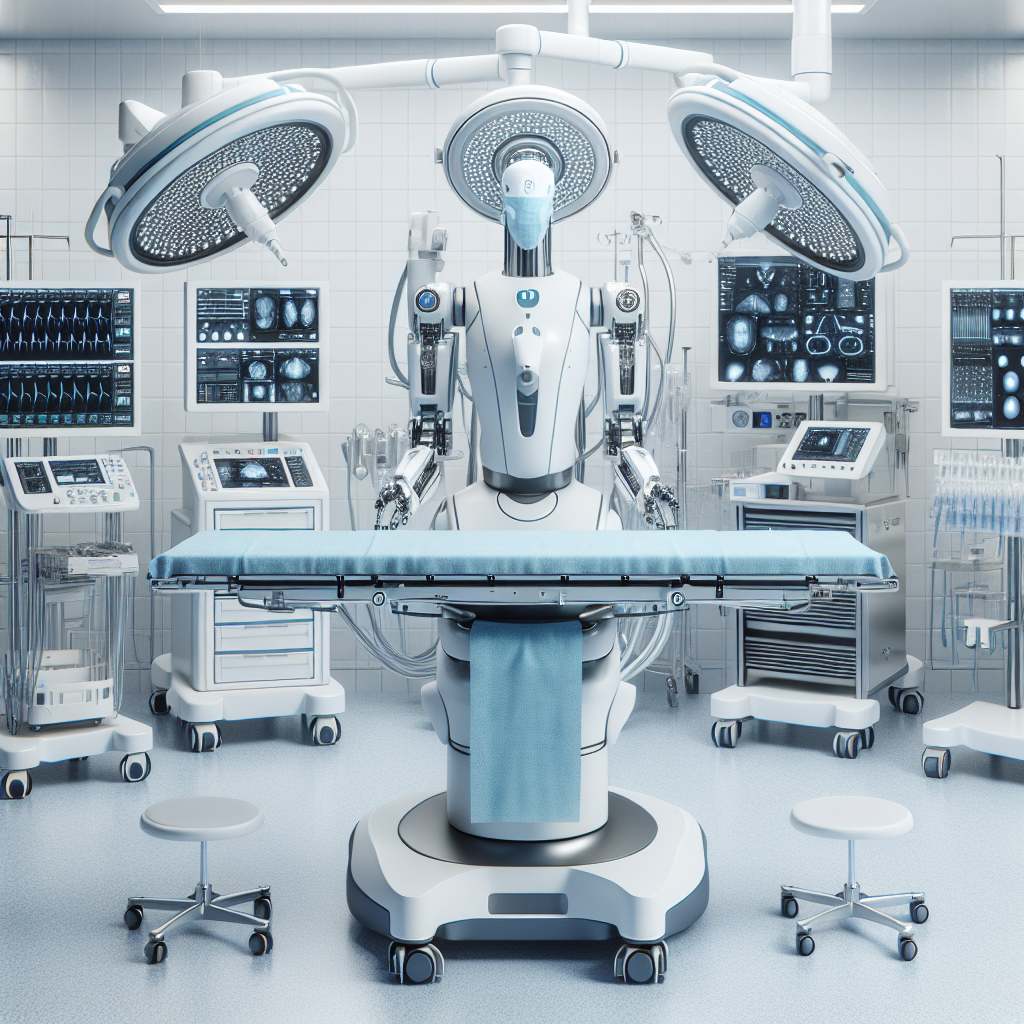
In 2024, robots assisted in over 2 million surgical procedures worldwide—more precise, more consistent, and often safer than human hands alone. From the OR to the nursing home, medical robots are changing how care is delivered. Robots in healthcare are no longer science fiction: they're in operating rooms, rehab clinics, hospital hallways, and nursing homes. This guide covers how healthcare robotics works across five categories—surgical systems, rehabilitation robots, hospital logistics, disinfection, and companion robots—and what it means for patients and providers. You'll learn how the da Vinci surgical system and other medical robots are used today, how robot-assisted surgery compares to traditional surgery, and where robots in hospitals are heading. For how robots sense and move with precision—the tech behind surgical and rehab systems—see our guide to robot sensors. For the bigger picture of robot types, see our types of robots overview, including the medical category. For the universal sense–think–act frame behind surgical and rehab systems, read how robots work.
Surgical Robots — Precision Beyond Human Capability
The da Vinci Surgical System
The da Vinci Surgical System from Intuitive Surgical is the best-known robotic surgery system. It uses teleoperation: the surgeon sits at a console with 3D vision and controls; the patient-side cart has robotic arms that hold instruments and a camera. The system filters tremor and scales motion so small hand movements become sub-millimeter precision at the surgical site. How the da Vinci surgical system works step by step: the surgeon operates through small incisions (minimally invasive); the robot replicates the surgeon's movements with enhanced dexterity. Over 10 million procedures have been performed with da Vinci. What is the da Vinci surgical system and how does it work? It's surgeon-controlled at all times—the robot does not act autonomously. Robotic-assisted minimally invasive surgery has become standard for prostatectomy, hysterectomy, and many other procedures. Newer systems like da Vinci 5 add force feedback and improved ergonomics so surgeons can feel tissue resistance and work with less fatigue. How are robots used in surgery today? Mostly as precision extensions of the surgeon's hands—teleoperation with better dexterity and stability than the human hand alone.
Orthopedic Robots
Stryker Mako is used for joint replacement—knee and hip. It uses CT-based planning and real-time feedback so the surgeon follows a patient-specific plan. Other platforms include Zimmer Biomet ROSA and similar systems. Orthopedic robots improve alignment and implant positioning, which can extend implant life and reduce revision rates. Medical robots in orthopedics are often categorized as “robotic-assisted” rather than fully automated—the surgeon remains in control.
Other Surgical Platforms
Medtronic Hugo is a modular system designed for competitive pricing and flexibility. CyberKnife is a radiosurgery system—it delivers high-dose radiation with sub-millimeter accuracy without an incision, used for tumors and other targets. Johnson & Johnson's Ottava and other next-gen systems are in development. What types of robots work inside hospitals right now? Surgical robots are the most visible; they're joined by logistics, disinfection, and therapeutic robots.
Are Robotic Surgeries Better?
Are robotic surgeries safer than traditional surgery? For many procedures, evidence shows less blood loss, shorter recovery, and fewer complications. It's not always superior—outcomes depend on procedure type, surgeon training, and patient factors. Robotic surgery advantages and risks compared to traditional surgery are still studied; the consensus is that for appropriate indications, robot-assisted surgery can improve consistency and reduce invasiveness. Our robot glossary defines terms like teleoperation and minimally invasive if you're diving deeper.
Rehabilitation Robots
Exoskeletons
Rehabilitation exoskeletons help patients with paralysis or weakness regain mobility. Ekso Bionics and ReWalk make powered exoskeletons that support and guide leg movement in physiologically correct patterns. How do exoskeleton robots help paralyzed people walk again? Motorized joints at hip and knee (and sometimes ankle) provide consistent, repetitive motion that promotes neural pathway recovery. They're used in stroke rehab, spinal cord injury, and similar settings. How do rehabilitation robots help patients recover from injuries? By delivering therapy that is consistent, measurable, and tireless—muscles and nerves “remember” the correct pattern. How are robots used in mental health and therapy? In physical rehab, robots provide structure and repetition; in mental health, companion robots like Paro offer comfort and engagement. The common thread is robots helping patients in ways that complement human caregivers.
Therapeutic Robots
Lokomat (Hocoma) is a treadmill-based gait training system: the patient is supported while the robot drives the legs in a walking pattern. Upper-limb rehab robots help stroke patients recover arm and hand function. Physical therapy robots and rehabilitation robots don't replace therapists—they extend what therapists can do and provide data on progress. How rehabilitation robots and exoskeletons help stroke patients recover is well documented in clinical literature. The key benefit is consistency: the robot never tires and can repeat the same motion thousands of times, which is difficult for a human therapist to match. Robots in hospitals and rehab centers are increasingly part of standard protocols for stroke, spinal cord injury, and orthopedic recovery.
Prosthetics and Bionics
Robotic prosthetic limbs use sensors and motors to restore grasp, grip force, and natural movement. Myoelectric control—using muscle signals from the residual limb—is common; research is advancing toward brain-computer interfaces for more intuitive control. Today's prosthetics are increasingly powered and sensor-driven—a form of robots helping patients at the individual level. Robotic prosthetic hands can adjust grip force for delicate vs heavy objects; lower-limb prosthetics can adapt to terrain and gait. These devices blur the line between assistive technology and medical robots.
Hospital Logistics Robots
Delivery Robots
TUG (Aethon) and Moxi from Diligent Robotics deliver medications, lab samples, linens, and supplies. They navigate corridors and elevators, freeing staff for direct patient care. Are hospital delivery robots common? Adoption is growing rapidly—hundreds of hospitals worldwide use TUG or similar; COVID-19 accelerated deployment. Robots in hospitals for logistics reduce walking time for nurses and cut down on errors from manual transport. Moxi can also fetch and deliver items, open drawers, and interact with hospital systems—an example of autonomous mobile robot hospital applications. Types of robots used in hospitals and healthcare settings 2026 increasingly include these delivery and logistics robots alongside surgical and disinfection systems.
Pharmacy Automation
Pharmacy robots (e.g. Omnicell, BD Rowa) automate medication dispensing—barcode scanning, dose verification, and cabinet management. How pharmacy robots dispense medications accurately in hospitals is well established: they reduce dispensing errors to near-zero for routine workflows. They're a key part of healthcare robotics behind the scenes.
Disinfection Robots
UV Disinfection
Xenex and similar systems use pulsed xenon UV-C light to kill pathogens in hospital rooms. How does UV disinfection work? Robots emit high-intensity UV-C that damages pathogen DNA; a room can be disinfected in minutes. How disinfection robots helped hospitals during COVID and beyond is well documented—they're now standard in many facilities. Disinfection robots complement manual cleaning and reduce healthcare-associated infections. They're typically deployed after a patient is discharged and the room is cleaned; the robot runs a cycle and staff can verify completion. Types of robots used in hospitals and healthcare settings today almost always include at least one disinfection or logistics robot in addition to any surgical or rehab systems.
Autonomous Cleaning
Autonomous mobile robots that navigate and disinfect large areas are used in airports, public spaces, and hospitals. They're part of the broader robots in healthcare ecosystem—less visible than surgical robots but increasingly routine.
Companion and Social Robots in Healthcare
Paro — The Therapeutic Seal
Paro is a therapeutic companion robot shaped like a seal—used in dementia and elder care. It responds to touch and sound, and studies show it can reduce agitation and medication use. What is Paro the robot seal? One of the most clinically studied social robots for elderly; it's not a pet replacement but a structured intervention. How robots are helping elderly people with dementia and loneliness is an active area—companion robots can provide consistency and engagement when human contact is limited. Paro is often used in group sessions or one-on-one in care facilities; staff are trained to integrate it into care plans rather than leave it as a standalone toy. Eldercare robots like Paro sit at the intersection of robots in healthcare and quality-of-life technology.
Telepresence Robots
Telepresence robots let clinicians “visit” patients remotely—driving a robot from a screen, with video and audio. InTouch Health and similar platforms saw a surge during COVID-19. How telepresence robots let doctors visit patients remotely is straightforward: the robot is the doctor's eyes and ears (and sometimes more) in the room. They're a form of robots in medicine that extends reach without travel.
Eldercare and Loneliness
Eldercare robots and companion robots for isolated seniors sit at the intersection of healthcare and quality of life. The ethical dimensions—replacing vs supplementing human connection—are debated. Robots helping patients in this space include Paro, Pepper (in some elder-care trials), and simpler companion devices. How are robots helping elderly people live independently? By assisting with reminders, fall detection, social engagement (e.g. video calls via a robot), and routine checks. They don't replace caregivers but can extend the time seniors can stay at home safely. Robots in medicine and healthcare robotics in the companion category are still evolving—evidence is growing that well-designed social robots can improve well-being when used as part of a broader care plan.
Challenges and Limitations
Cost
Surgical robotics systems cost $1–2.5 million per system, plus per-procedure instrument costs. How much does the da Vinci surgical system cost? Roughly $1.5–2.5M per system, with disposables adding $700–3,500 per procedure. That raises health equity questions—who can afford robotic surgery—and limits adoption in resource-poor settings. Rehab exoskeletons can run $50K–$200K; logistics and UV robots are more affordable ($5K–$50K range). Robots in healthcare economics are improving as more competitors enter and procedures scale, but upfront cost remains a barrier for many facilities.
Training
Surgeons need extensive training on each robotic surgery platform. The learning curve is real; outcomes improve with experience. Simulators and structured curricula help, but credentialing and proctoring add time and cost. Clinical robots and hospital robots also require staff training for logistics and disinfection systems—though those are typically shorter and less specialized than surgical training.
Regulation
FDA clearance and the 510(k) pathway govern medical devices, including surgical and therapeutic robots. Safety standards are strict—as they should be for medical robotics. New systems take years to reach the market. Patient monitoring and data from robots in hospitals may also fall under privacy and device regulations. The regulatory environment ensures that robotic surgery systems and other medical robots meet evidence and safety bars before widespread use.
The Future of Healthcare Robotics
Autonomous Surgery
Can a robot perform surgery without a doctor? Not yet. All current surgical robots are surgeon-controlled. Autonomous surgery—AI-guided procedures with reduced human intervention—is research-stage and likely 10+ years away for most procedures. Some research systems can perform limited tasks (e.g. suturing, needle steering) under supervision; full autonomy for complex procedures would require robust perception, planning, and safety guarantees that don't exist today. Future of surgical robots autonomous surgery and AI assistance is a hot topic in research. For how AI is used in robotics more broadly, see our guide to AI in robotics.
Micro-Robots and AI + Robot
Micro-robots for drug delivery and targeted therapy are in early research—tiny devices that could one day deliver drugs to a tumor or clear a clot. How AI and robots are changing diagnostics and medical imaging is already real: AI reads scans and flags anomalies; the next step is tighter coupling where AI suggests and robots execute (e.g. biopsy or ablation). AI diagnostics plus robotic execution is the convergence many researchers are aiming for. What is the future of robots in healthcare and medicine? More automation in logistics and disinfection, smarter surgical assistance (still surgeon-in-the-loop), better rehab and companion tools, and eventually micro-robots and AI-guided interventions—with humans remaining central to decision-making and care. Robotic nurse assistant and drug delivery robot concepts are already in pilot in some facilities.
FAQ
Is robotic surgery safer than traditional surgery?
For many procedures, yes—less blood loss, shorter recovery, fewer complications in studied populations. It depends on procedure type and surgeon experience. Robotic systems don't replace surgeon skill; they augment it with precision and consistency. Surgical robots and robotic surgery systems are tools; outcomes still depend on the team and the indication. Robotic surgery advantages and risks should be discussed with your surgeon for your specific case.
How much does the da Vinci surgical system cost?
Approximately $1.5–2.5 million per system, plus $700–3,500 per procedure in disposable instruments. Hospitals absorb or pass on costs; availability varies by region and institution. Newer and modular systems (e.g. Hugo) aim to lower capital cost; robot-assisted surgery economics continue to evolve as adoption grows.
Can a robot perform surgery without a doctor?
No. All current surgical robots are teleoperated—the surgeon controls every motion. The robot enhances human precision; it doesn't replace the surgeon. Fully autonomous surgery remains in research.
How do rehabilitation exoskeletons help patients walk?
Motorized joints support and guide leg movement in physiologically correct patterns. Repetitive, consistent motion promotes neural recovery. Used under clinical supervision for spinal cord injury, stroke, and other conditions.
What is Paro the robot seal?
A therapeutic companion robot used in dementia and elder care. It responds to touch and sound and has been shown in studies to reduce agitation and medication use. One of the most researched social robots in healthcare.
Will robots replace nurses and doctors?
No. Robots in healthcare augment staff—handling logistics, precision tasks, and repetitive therapy. Human judgment, empathy, and decision-making remain irreplaceable. The goal is to free clinicians for high-value care. Can robots replace nurses and doctors in hospitals? In practice they extend what caregivers can do rather than replace them; the evidence and ethics point toward partnership, not substitution.
Are hospital delivery robots common?
Growing rapidly. Hundreds of hospitals worldwide use TUG, Moxi, or similar systems. COVID-19 accelerated adoption. They're part of the types of robots used in hospitals and healthcare settings that are here to stay.
How does UV disinfection work?
Robots emit high-intensity UV-C light that damages pathogen DNA/RNA. Rooms can be disinfected in minutes. Proven effective against bacteria, viruses, and spores. IEEE Spectrum and other sources cover medical robotics and disinfection tech.
Conclusion
Robots in healthcare are already saving lives and improving outcomes—in surgery, rehabilitation, logistics, and sanitation. Healthcare robotics and medical robotics span from the da Vinci to Paro to Moxi and Xenex; each category addresses different needs. Clinical robots, hospital robots, and therapeutic robots are no longer rare—they're part of the fabric of modern care. Costs are coming down for some systems, AI is making others smarter, and adoption is accelerating. To explore all IEEE Robots Guide — types of robots including medical and assistive, see our types of robots guide. To understand how AI powers the next wave of robots in medicine, read our AI in robotics guide. The future of robots in hospitals is more robots—but always in partnership with the humans who deliver care. For a different regulated extreme—autonomy under delay and vacuum—see robots in space. Biomedical robots and biotech robots will keep expanding what's possible while keeping the patient and the care team at the center.