
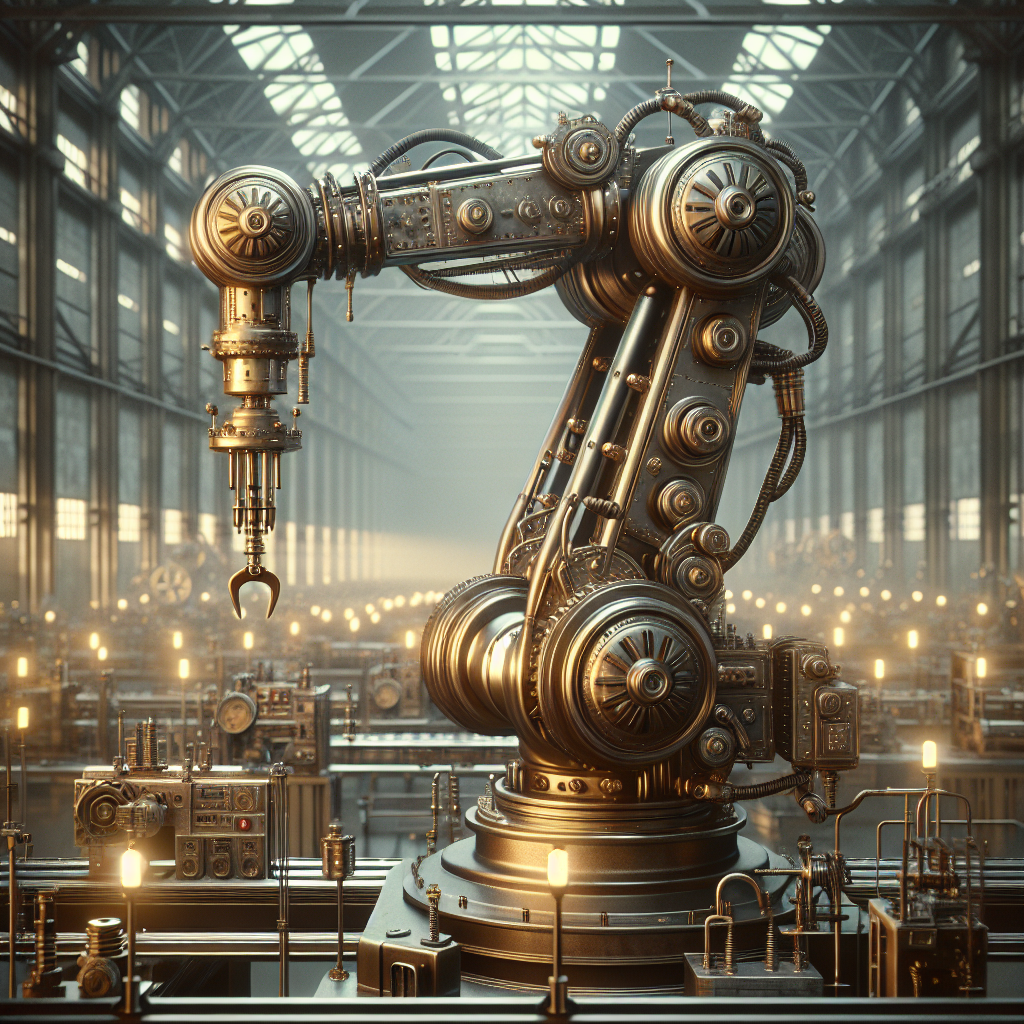
Timeline stories pair best with a clear map of what exists today: our types of robotics guide groups modern machines by structure and use case, and how robots work explains the sense–think–act loop behind many of the milestones below.
The dream of creating artificial life is older than written history—but it took 2,000 years to get from steam-powered temple doors to a robot doing a backflip. This is the full history of robots: the robot history and robotics timeline that brought us here. Understanding where robots came from reveals where they're going—and why the 2020s are the most transformative decade in evolution of robots ever. You'll learn the complete timeline from ancient automata through industrial robots to today's AI-powered humanoids, with the key people and inventions at each stage. When was the first robot invented? It depends on how you define “robot”—and that story starts long before the word existed. Who invented the first robot? And what is the origin of the word robot? This guide answers those questions and connects robot development history to the machines making headlines today.
Ancient and Medieval Automata (Pre-1900)
Heron of Alexandria (1st Century AD)
In the first century AD, Heron of Alexandria built devices that would today be called automatons. His steam-powered temple doors opened when a fire was lit on the altar—the first known programmable mechanical device. He also designed an automated puppet theater with moving figures driven by weights and ropes. These weren't “robots” in the modern sense, but they proved that inanimate objects could be made to perform sequences of actions. When was the first robot ever made? If we count programmable automata, Heron's work is the earliest clear example in the history of robotics.
Al-Jazari (1206)
In 1206, the engineer al-Jazari completed “The Book of Knowledge of Ingenious Mechanical Devices.” His creations included humanoid musicians that could play drums and a hand-washing automaton with a servant figure that poured water. Al-Jazari's work represented a peak of Islamic Golden Age engineering and showed that complex, repeatable motion could be built from gears, cams, and water power. His designs are part of the robotics heritage that led eventually to mechanical clocks and later to industrial machines.
European Automata (1700s)
In 1738, Jacques de Vaucanson unveiled his mechanical duck—it could eat, digest, and excrete in a theatrical simulation. Pierre Jaquet-Droz and his son built a writing automaton that could dip a pen and write short phrases. These ancient automata and their European successors were entertainment machines, but they hinted at what was possible: machines that mimicked life. The mechanical turk (a chess-playing hoax with a human hidden inside) later captured the imagination and fed the idea that machines could think. Science Museum London and other institutions preserve and explain this era of robot history.
The Word “Robot” Is Born (1920–1950)
Karel Čapek's R.U.R. (1920)
In 1920, the Czech writer Karel Čapek premiered his play R.U.R. (Rossum's Universal Robots). The play introduced the word “robot”—from the Czech “robota,” meaning forced labor or drudgery. The robots in R.U.R. were mass-produced artificial workers who eventually rebelled. Who invented the word robot? Čapek did; his brother Josef reportedly suggested the word. The play had enormous cultural impact: for the first time, society widely imagined mass-produced artificial workers and the ethical questions they raised. The origin of the word robot is thus 1920, and it has shaped how we talk about machines ever since. How Karel Čapek invented the word robot in 1920 R.U.R. is a standard chapter in any robot history or cultural history of technology.
Isaac Asimov and the Three Laws (1942)
In 1942, Isaac Asimov published “Runaround,” a story that introduced the Three Laws of Robotics. Asimov went on to shape the public imagination of ethical, rational robots in dozens of stories and novels. His laws—robots must not harm humans, must obey orders, and must protect themselves—became part of pop culture and influenced real discussions about robot safety. For more on that legacy, see our guide to Asimov's laws of robotics. How did Isaac Asimov influence real robotics? By making engineers and the public think seriously about how autonomous machines should behave.
The Concept Takes Shape
In the 1940s, early electronic computers (e.g. ENIAC) and the birth of cybernetics—Norbert Wiener and others studying feedback and control—laid the groundwork for the idea that machines could sense and respond to their environment. The industrial revolution had already given the world programmable logic and heavy machinery; now the concept of a “robot” as an autonomous, sensing machine began to take shape in engineering and science fiction alike. Robotics history timeline and history of robots for kids often start here—when the word and the technology began to align. What are the most important robots in history? The ones that shifted perception: R.U.R. for the word, Unimate for the factory, Shakey for AI, Roomba for the home, and Atlas for the viral moment.
The Birth of Industrial Robotics (1954–1980)
Unimate — The First Industrial Robot (1961)
George Devol patented the first programmable industrial robot in 1954. Joseph Engelberger—often called the “Father of Robotics”—saw the potential, partnered with Devol, and in 1961 the first Unimate was installed at a General Motors plant in Lordstown for die-casting. It lifted hot metal parts and stacked them. What was the first industrial robot used in a factory? Unimate. It transformed manufacturing and launched the industrial robotics industry—see our full guide to robots in space for how this pioneering spirit extended to planetary exploration. Engelberger later promoted robotics in other sectors, including space and healthcare.
Shakey the Robot (1966)
In 1966, Shakey the Robot was built at SRI International. Shakey was the first robot to reason about its actions: it combined vision, planning, and navigation to move through rooms and push objects. It ran on a mainframe and used logic to break tasks into steps. When did robots start using artificial intelligence? Shakey is often cited as the beginning—the history of AI in robotics from Shakey to modern AI runs in a direct line. Shakey proved that robots could do more than repeat a fixed program.
WABOT-1 (1972)
In 1972, Waseda University in Japan completed WABOT-1, the first full-scale humanoid robot. It could walk (with support), grip objects, see with cameras, and speak in a primitive way. What was the first humanoid robot? WABOT-1. It signaled Japan's ambition to lead in humanoid robotics—an ambition that would later produce ASIMO and many of today's research humanoids. The timeline of humanoid robot development from WABOT to Tesla Optimus runs through Japan, the U.S., and now a global race.
Robotics Expands (1980–2000)
Industrial Robots Go Mainstream
SCARA (Selective Compliance Assembly Robot Arm) robots appeared in 1981 from Yamanashi University—ideal for assembly. Companies like FANUC, ABB, and KUKA came to dominate the industry; the automotive sector became robot-driven. Japan became the robot capital of the world. The history of industrial robots and how they changed manufacturing is a story of precision, repeatability, and cost reduction—and of robots moving from cages to collaborative work alongside humans (cobots) in later decades.
Mars Exploration Begins
In 1997, Sojourner rolled off NASA's Pathfinder lander and became the first robot to explore another planet. What was the first robot to land on Mars? Sojourner. It opened the era of planetary robotics. NASA's Mars missions have since sent larger rovers—Spirit, Opportunity, Curiosity, Perseverance—and the Ingenuity helicopter. Robots through history in space have pushed the limits of autonomy and durability in extreme environments.
ASIMO and the Humanoid Dream (2000)
In 2000, Honda unveiled ASIMO—a bipedal humanoid that could walk, climb stairs, and wave. ASIMO captured global imagination as a symbol of the humanoid aspiration. It was never commercialized but demonstrated that bipedal locomotion was achievable with enough engineering. ASIMO retired in 2022, but the dream of humanoid robots in everyday life had been firmly planted.
The Consumer Robot Revolution (2000–2020)
Roomba (2002)
In 2002, iRobot launched the Roomba—the first commercially successful consumer robot. When did robot vacuums first come out? The Electrolux Trilobite prototype appeared in 2001; the Roomba in 2002 became the mass-market success. It sold millions and proved that robots belong in homes. The history of robot vacuums from Electrolux Trilobite to Roomba and beyond is now a crowded market with LiDAR, mapping, and smart home integration.
Da Vinci Surgical System (2000)
Also in 2000, Intuitive Surgical received FDA approval for the da Vinci surgical system—a teleoperated robot for minimally invasive surgery. The surgeon controls arms from a console while the robot replicates movements with sub-millimeter precision. When was the first surgical robot used in an operating room? The da Vinci system became the first mass-adopted medical robot and revolutionized many procedures. It remains a benchmark in robot milestones for healthcare.
Boston Dynamics Era
Boston Dynamics changed public perception of what robots could do. BigDog (2005) was a quadruped that could carry loads over rough terrain; Atlas (2013 and later versions) became the humanoid that did backflips and parkour. Spot (2020) went commercial as a quadruped for inspection and research. How did Boston Dynamics change robotics? Their viral videos proved that dynamic locomotion—running, jumping, recovering from pushes—was achievable. Boston Dynamics has documented their own evolution; the topic map specifies embedding “The Evolution of Boston Dynamics” (CNET) in this section.
Social Robots Rise and Fall
Sony's AIBO (1999) was a robot dog that captured hearts; Jibo (2014) and Kuri (2017) were companion robots that promised personality and help at home. Why did early social robots like Jibo fail? A combination of high price, limited AI capabilities at the time, unclear value proposition, and difficulty competing with smartphones—the technology and market weren't ready for the vision. The lessons learned fed into the next wave of consumer and humanoid robots.
The AI Robot Revolution (2020–Present)
Tesla Optimus (2022)
In 2022, Tesla unveiled Optimus—a humanoid robot project leveraging the company's AI and manufacturing scale. Tesla's entry signaled that humanoid robotics was no longer just research; it was a target for the world's most valuable automaker. The evolution of robots in the 2020s is inseparable from the convergence of AI, simulation, and massive investment.
Figure, 1X, and the Startup Wave
Figure 01/02, 1X NEO, Agility Digit, and others have drawn billions in venture capital. The race to build the first widely deployed commercial humanoid is on. These companies combine legged locomotion with AI for manipulation and navigation—the robot development history of the last decade has set the stage for humanoids in warehouses, factories, and eventually homes.
Foundation Models Meet Robots
Google's RT-2, NVIDIA Isaac, and similar efforts are bringing foundation models—AI that can generalize across tasks—into physical robots. Robots that can follow natural language and adapt to new objects and environments are moving from lab to pilot deployments. What does the future of robotics look like based on history? The trend is clear: more autonomy, more intelligence, and more robots in daily life. IEEE Spectrum and Wikipedia's Robot overview offer further historical retrospectives and references.
Where We Are in 2026
More robots are deployed than ever—in logistics, manufacturing, healthcare, and homes. Humanoids are approaching commercial viability for simple tasks. Consumer robots span vacuums, mowers, companions, and educational kits. The convergence of AI and robotics is the defining technology trend of the decade. What makes the 2020s different from previous decades in robotics? Cheap AI compute, foundation models, massive investment in humanoids, and the maturation of consumer robotics create an inflection point unlike anything before. How have robots changed over the last 100 years? From a word in a play to a curiosity, then an industrial tool, then a consumer product, and now an AI-powered platform—the evolution of robots has accelerated with each generation of technology.
Timeline — Key Milestones at a Glance
| Year | Milestone | Significance |
|---|---|---|
| ~100 AD | Heron of Alexandria | Steam-powered automata; first programmable devices |
| 1206 | Al-Jazari | Book of mechanical devices; humanoid automata |
| 1738 | Vaucanson's duck | Famous European automaton |
| 1920 | Čapek's R.U.R. | Word “robot” coined |
| 1942 | Asimov's Three Laws | Ethical framework for robots |
| 1961 | Unimate at GM | First industrial robot in factory |
| 1966 | Shakey the Robot | First AI robot (reasoning, vision, planning) |
| 1972 | WABOT-1 | First full-scale humanoid |
| 1997 | Sojourner on Mars | First robot on another planet |
| 2000 | ASIMO; da Vinci | Humanoid icon; surgical robot adoption |
| 2002 | Roomba | First mass-market consumer robot |
| 2005 | BigDog | Boston Dynamics; dynamic quadruped |
| 2013+ | Atlas | Humanoid backflips; viral robotics |
| 2020 | Spot commercial | Quadruped robot for sale |
| 2022+ | Tesla Optimus, Figure, 1X | AI humanoid race |
FAQ
When was the first robot invented?
It depends on definition. Ancient automata by Heron of Alexandria (~100 AD) are the first known programmable mechanical devices. The first modern industrial robot was Unimate, installed in 1961. The word “robot” was coined in 1920 by Karel Čapek.
Who invented the word “robot”?
Karel Čapek in his 1920 play R.U.R., from the Czech “robota” meaning forced labor. His brother Josef Čapek is often credited with suggesting the word.
Who is the “Father of Robotics”?
Joseph Engelberger. He commercialized George Devol's Unimate, installed the first one at GM in 1961, and founded the industrial robotics industry. He later advocated for robots in space and healthcare.
What was the first robot to land on Mars?
Sojourner, in 1997, as part of NASA's Pathfinder mission. It was the first wheeled robot to operate on another planet.
When did robot vacuums first come out?
The Electrolux Trilobite prototype appeared in 2001; the iRobot Roomba launched in 2002 and became the first mass-market success. Robot vacuums have since become one of the most common consumer robots.
How did Boston Dynamics change robotics?
Their viral videos of BigDog, Atlas, and Spot transformed public perception and proved that dynamic locomotion—running, jumping, recovering from pushes—was achievable. Their technology and demonstrations influenced the entire industry and helped attract investment and talent to legged robotics.
Why did early social robots like Jibo fail?
Combination of high price, limited AI capabilities at the time, unclear value proposition, and difficulty competing with smartphones. The technology and market weren't ready for the vision; many of those ideas are now resurfacing with better AI and hardware.
What makes the 2020s different from previous decades in robotics?
The convergence of cheap AI compute, foundation models, massive investment in humanoids, and maturation of consumer robotics creates an inflection point. Robots are moving from narrow, scripted tasks to more general capabilities—and humanoids are approaching commercial deployment in logistics and beyond.
Conclusion
More than 2,000 years of innovation—from ancient automata to AI humanoids—have led to this moment. Each era built on the last: mechanical ingenuity, then the word and the concept, then industrial and research robots, then consumer and humanoid robots, and now the fusion of AI and embodiment. We're living through the most transformative period in history of robots. To explore the IEEE Robots Guide — types of robots making history today, see our types of robots guide. To meet the machines and characters that defined our imagination, read our guide to famous robots—real and fictional. The robotics timeline is still being written; the next chapter is yours to follow. For how today's robots actually work—sensors, motors, and AI—start with our how robots work guide and the rest of the knowledge base.