
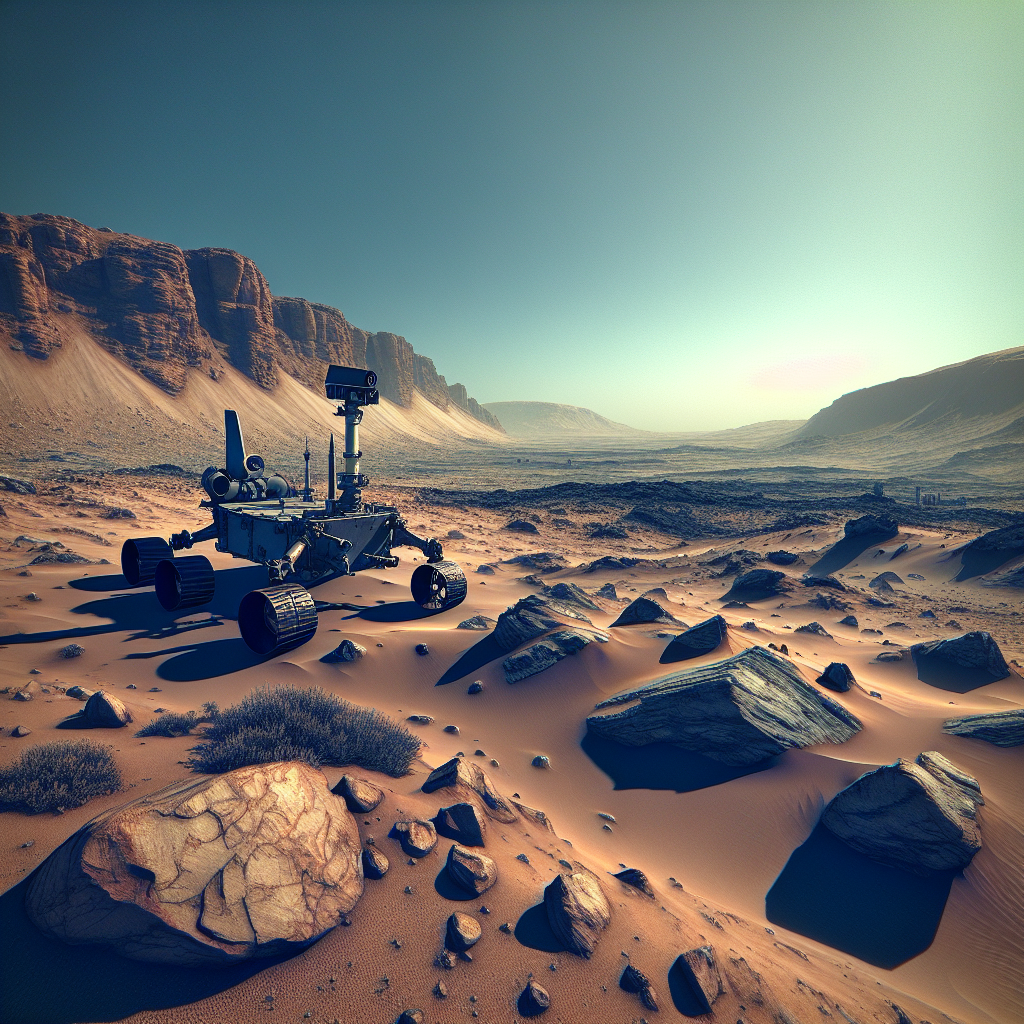
Every planet, moon, and asteroid humanity has ever visited was explored first by a robot—and most were explored only by robots. Space robotics and robotic space exploration have opened the solar system without a single human leaving Earth orbit since Apollo. Robots in space are our eyes, hands, and wheels beyond Earth: Mars rovers, NASA robots on the International Space Station, and robotic spacecraft heading to the outer solar system. Space robotics is the extreme frontier of autonomous engineering—these machines survive radiation, vacuum, temperature swings, and communication delays measured in minutes. This guide explains how space robots work, the landmark missions past and present, the technology that enables them, and the missions coming next. For how robot sensors and autonomy work in harsh environments, see our robot sensors guide. For the bigger picture of robot types including planetary and orbital robots, read our types of robots overview. For the sense–think–act loop behind rover autonomy, see how robots work. To trace how we got here, explore our history of robots.
Mars Rovers — Driving on Another Planet
Perseverance (2021–Present)
Perseverance is NASA's flagship Mars rover—part of the Mars 2020 mission. It collects rock and soil samples for future return to Earth, drills into the Martian surface, photographs the terrain, and analyzes chemistry with onboard instruments. How NASA's Perseverance rover works on Mars explained for beginners: it uses autonomous navigation (AutoNav)—cameras image the terrain, the onboard computer evaluates safety and plans a path, then the rover drives without real-time human control. With a one-way delay to Mars of 4–24 minutes, how do Mars rovers navigate and drive themselves? Operators on Earth send high-level goals and waypoints; the rover handles local hazard avoidance and path execution. Perseverance also carried Ingenuity, the first aircraft to fly on another planet. What robots are currently on Mars right now? Perseverance and Curiosity are active; China's Zhurong is in hibernation. Robots on Mars represent the pinnacle of robotic space exploration.
Curiosity (2012–Present)
Curiosity (Mars Science Laboratory) has been on Mars for over 12 years and is still driving. It discovered organic molecules and evidence of an ancient lake in Gale Crater. Unlike later rovers that rely on solar power in the dusty Martian environment, Curiosity is nuclear-powered—a radioisotope thermoelectric generator (RTG) provides steady power. Complete list of robots NASA has sent to Mars from Sojourner to Perseverance includes Sojourner (1997), Spirit and Opportunity (2004), Curiosity (2012), and Perseverance (2021). Each generation is dramatically more capable. NASA robots on Mars have rewritten our understanding of the Red Planet.
The Full Lineage
Sojourner (1997) was the first Mars rover—small, solar-powered, and tethered to the Pathfinder lander. Spirit and Opportunity (2004) were designed for 90 days; Opportunity lasted 15 years and drove 45 km. Zhurong (China, 2021) is currently in hibernation. How do robots survive in the extreme conditions of space? Mars rovers use radiation hardening, robust thermal management, and power systems (solar or RTG) designed for the Martian environment. Each generation added more autonomous navigation, better instruments, and longer life. Space robotics and planetary robots push the limits of what robotic spacecraft can do—robots used in space today are the result of decades of iteration and lessons learned from every mission.
Ingenuity — First Aircraft on Another Planet
How It Works
How does the Ingenuity helicopter fly on Mars? Mars's atmosphere is about 1% of Earth's density, so Ingenuity uses counter-rotating blades spinning at roughly 2,400 RPM to generate enough lift. It's solar-powered and flies autonomously—real-time control from Earth is impossible because of the delay. How the Ingenuity Mars helicopter made history as first aircraft on another planet is well documented: it was designed for 5 flights and completed 72 before mission end in 2024. Autonomous navigation and hazard avoidance were essential; the helicopter planned its own paths and landed safely. Space robots that fly open new possibilities for scouting and exploration.
Why It Matters
Ingenuity proved that powered flight works on Mars. Future aerial scouts could guide rovers and explore terrain that wheels cannot reach—canyons, crater walls, and rugged landscapes. What robots will NASA send to space next? Aerial platforms are part of the roadmap for Mars and, one day, for Titan (Dragonfly). Robotic space exploration is expanding from wheels to rotors; space robots that can fly add a new dimension to NASA robots and robots in space.
Robots on the International Space Station
Canadarm2 and Dextre
What is the robotic arm on the International Space Station? Canadarm2 is a 17-meter robotic arm with seven joints—built by the Canadian Space Agency and used by NASA. It captures visiting spacecraft (including cargo vehicles), moves modules, and supports spacewalks. How the Canadarm and Canadarm2 robotic arms work on the space station: they're controlled by ground operators and astronauts; the arm has 6 degrees of freedom plus translation and can move masses up to 116,000 kg in zero gravity. Dextre is a two-armed dexterous manipulator that mounts on the end of Canadarm2 for delicate tasks like maintenance and replacement of components. Orbital robots like these are essential for satellite servicing and station operations. NASA's NASA International Space Station and research pages document these systems.
Astrobee
Astrobee is a free-flying cube robot inside the ISS—it navigates autonomously in microgravity and serves as a research platform for zero-gravity robotics. How do space robots communicate with Earth from millions of miles away? For the ISS, delay is minimal (seconds); for Mars, the Deep Space Network (large dish antennas in California, Spain, and Australia) receives radio signals at the speed of light, but data rates are low compared to Earth. Robots in space on the ISS bridge the gap between orbital and deep-space robotics.
Beyond Mars — Exploring the Solar System
OSIRIS-REx and Sample Return
OSIRIS-REx visited asteroid Bennu, collected a sample with a robotic touch-and-go maneuver, and returned it to Earth in 2023. How robotic sample return missions bring pieces of other worlds to Earth requires precision navigation and sampling without landing—the arm contacted the surface briefly to stir up material into a collection head. Japan's Hayabusa2 did the same at asteroid Ryugu and brought back samples in 2020. Space robotics for sample collection and drill operations is advancing rapidly; future missions will bring back rocks from Mars and the Moon. Robots in space are not only explorers but couriers—delivering pieces of other worlds to scientists on Earth.
Voyager Probes
The Voyager probes launched in 1977 and are still transmitting from interstellar space—the longest-running robots in space in history, 47+ years operational. They carry golden records with sounds and images of Earth. How long do space robots last? It varies: Ingenuity was designed for 5 flights and completed 72; Opportunity was designed for 90 days and lasted 15 years; Voyager has been operating for 47+ years. Robotic spacecraft built for durability can exceed every design goal.
Upcoming Missions
What robots and spacecraft will explore the outer solar system next? Europa Clipper will study Jupiter's moon Europa; Dragonfly will send a rotorcraft to Saturn's moon Titan; VIPER will hunt for lunar ice at the Moon's south pole. Lunar Gateway—a Moon-orbiting space station—will include robotics. Will robots explore Jupiter's moon Europa? Yes—Europa Clipper is scheduled to launch in the 2020s. NASA's Mars missions page and agency announcements cover current and future NASA robots and robotic space exploration.
How Space Robots Survive
Radiation Hardening
How do robots survive in the extreme conditions of space? Space radiation would destroy consumer electronics in short order—cosmic rays and solar particles can flip bits and degrade silicon. Space-rated components are often slower but radiation-tolerant; many are custom-designed or use special manufacturing. Radiation hardening is essential for robots in space beyond low Earth orbit. How extreme space conditions affect robot design and engineering is a core theme of space robotics—every part of a robotic spacecraft must be qualified for the environment.
Power Systems
Inner solar system missions use solar panels; Mars and beyond often use radioisotope thermoelectric generators (RTG) for steady power where sunlight is weak. Power budgets are measured in watts—every subsystem is optimized. Dust on Mars can coat solar panels and reduce output; Curiosity's RTG avoids that problem. Robotic spacecraft and planetary robots depend on reliable power for years or decades. How do robots survive in the extreme conditions of space? Power is one of the first constraints—without it, space robots go silent.
Communication Delays
Mars: 4–24 minutes one-way. Moon: about 1.3 seconds. Deep space: hours. Autonomous operation is mandatory beyond Earth orbit—there is no joystick. How autonomous navigation lets Mars rovers drive themselves without human input is the AutoNav story: sense, plan, execute, all onboard. For how AI enables this kind of autonomy, see our guide to AI in robotics. Teleoperation is possible only for the Moon and ISS; elsewhere, space robots must think for themselves.
Thermal Management
Mars ranges from about -120°C to 20°C. Space robots use heaters, insulation, and thermal switches to survive the night and extreme swings. Batteries and electronics must be kept within operating range; during the Martian night, power comes from batteries charged by solar panels or from an RTG. Robots used in space are designed for the thermal environment of their destination—another reason extraterrestrial robots and space robotics are engineering marvels. How extreme space conditions affect robot design and engineering is a constant theme: every subsystem is optimized for survival first, then science.
The Future of Space Robotics
Lunar Construction
Could robots build a base on the Moon or Mars? That's the plan. Multiple space agencies and companies are developing construction robots for lunar habitats. ISRU (in-situ resource utilization)—using local materials—and 3D printing with lunar regolith are in active development. The idea: land robots first, have them prepare the site and assemble structures, then send humans when the environment is ready. Future of space robotics lunar bases orbital construction and asteroid mining is no longer science fiction; it's the stated goal of NASA's Artemis program and international partners. Can robots build things in space for humans? Yes—and that's the direction the industry is heading.
Orbital Assembly and Servicing
How robots are used to repair and service satellites in orbit is already happening: Northrop Grumman's Mission Extension Vehicle (MEV) has docked with aging satellites to extend their life, and companies like GITAI are building satellite servicing robots for more complex tasks. Orbital robots that can refuel, repair, or assemble structures will reduce space debris and extend satellite life. Hubble servicing missions showed that astronauts and robotics can maintain spacecraft in orbit; the next step is doing it robotically without crew. IEEE Spectrum and other sources cover space robotics and orbital servicing.
Asteroid Mining and Human-Robot Teams
Asteroid mining—robotic extraction of water and metals—remains speculative but attracts investment. Water from asteroids could support life support and propellant; metals could be used in orbit. Future Mars missions will combine human astronauts with robot scouts, builders, and helpers; the human-robot symbiosis model is the likely path—robots do the dangerous or repetitive work, humans make decisions and handle the unexpected. Robots in space and robotic space exploration will increasingly be team efforts.
FAQ
What robots are currently on Mars?
Perseverance and Curiosity are active. Zhurong (China) is in hibernation. Ingenuity completed its mission in 2024 after 72 flights. What robots are currently on Mars right now? Two NASA rovers are driving and exploring; they are the primary robots on Mars today.
How do Mars rovers drive without a driver?
AutoNav: cameras photograph the terrain, the onboard computer evaluates safety and plans a path, then the rover executes. Human operators set waypoints and goals; the rover handles local navigation and hazard avoidance autonomously. How do Mars rovers navigate and drive themselves? With a combination of stereo vision, terrain mapping, and path planning—all running on radiation-hardened computers millions of miles from Earth. There is no joystick; the delay makes real-time control impossible. Autonomous navigation space and robotic space exploration depend on this kind of onboard intelligence.
How does the Canadarm2 work?
It's a 17 m robotic arm with 7 joints—6 DOF plus translation. Controlled by ISS crew or ground operators; it can move up to 116,000 kg in zero gravity. What is the robotic arm on the International Space Station? Canadarm2 (and Dextre) are the primary robotic arm ISS systems for capturing vehicles, moving payloads, and supporting maintenance.
How long do space robots last?
Varies widely. Ingenuity: 5 flights designed, 72 completed. Opportunity: 90 days designed, 15 years. Voyager: 47+ years and counting. Space robots that are well designed and maintained can far exceed their nominal mission.
How do space robots communicate with Earth?
The Deep Space Network—large dish antennas in California, Spain, and Australia—receives and sends radio signals at the speed of light. Data rates are very low compared to Earth internet; that's why autonomous navigation and onboard processing are essential. How do space robots communicate with Earth from millions of miles away? Via radio; the delay and bandwidth constraints make autonomy mandatory. Commands and software updates are sent in batches; the rover or spacecraft executes them and sends back telemetry and science data when the orbit allows a line of sight to Earth.
Could robots build a base on the Moon or Mars?
Yes—that's the goal. Construction robots, ISRU, and 3D printing with local materials are in development. Robots in space will likely build the first habitats before humans arrive.
Why not just send humans?
Robots are cheaper, don't need life support, can tolerate radiation and extreme temperatures, and can be left indefinitely. Robotic vs human exploration: robots go first; humans follow when it's safe and worthwhile. What is the difference between a rover a probe and a satellite? Rovers roll on surfaces; probes include orbiters and flybys; satellites typically orbit Earth or another body—all are robotic spacecraft.
What is the most advanced space robot?
Perseverance is among the most sophisticated planetary robots—sampling, drilling, and autonomous driving with a full suite of instruments. Canadarm2 and Dextre are the most capable orbital robotic system for manipulation, having supported hundreds of captures and spacewalks. Each excels in its domain. What is the most advanced space robot? Depends on the mission—surface vs orbital—but both represent the state of the art in space robotics. NASA robots and international partners continue to push what robots in space can do.
Conclusion
Robots in space are humanity's most ambitious machines—operating autonomously in environments that would kill a human instantly. From Mars rovers to the Canadarm to the Voyager probes, space robots and robotic space exploration have opened the solar system. Every major space exploration achievement in the next decade will be robot-first. To see how these extreme robots fit into the full picture, read our types of robots guide. To explore the sensors and technology that make it possible, see our robot sensors guide. If you're inspired to build your own robot, our learn robotics roadmap shows you how. The future of robots in space—lunar bases, orbital construction, and human-robot teams—is being built today.